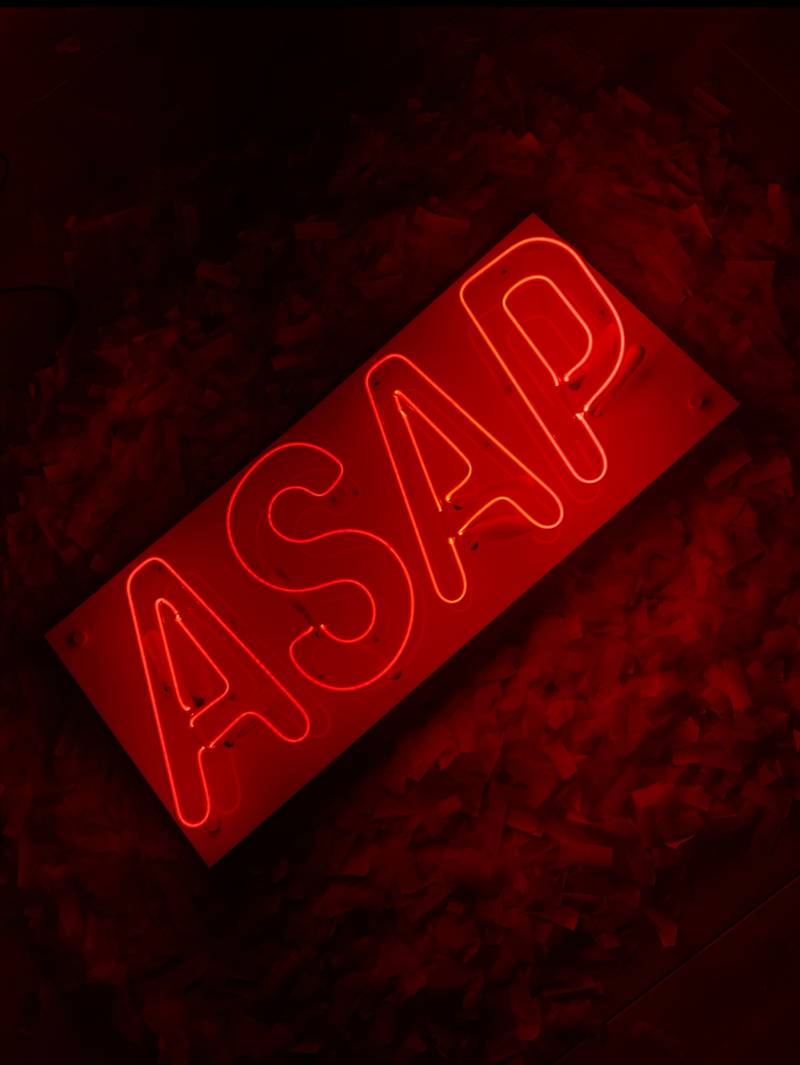
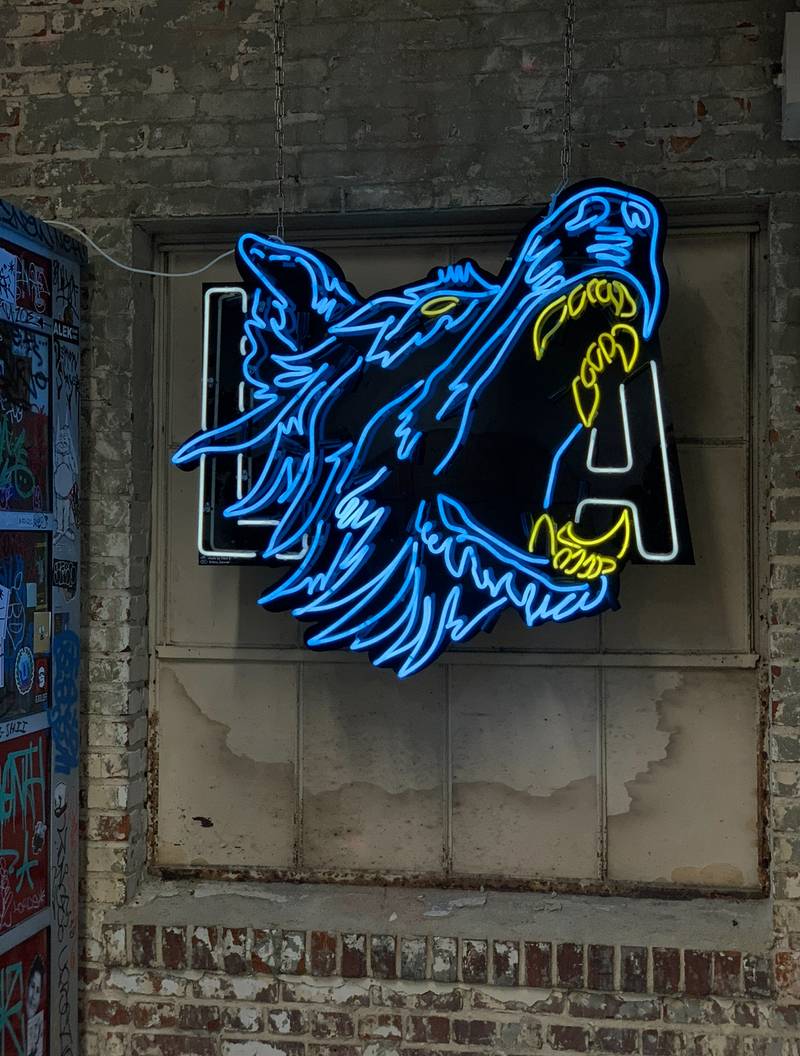
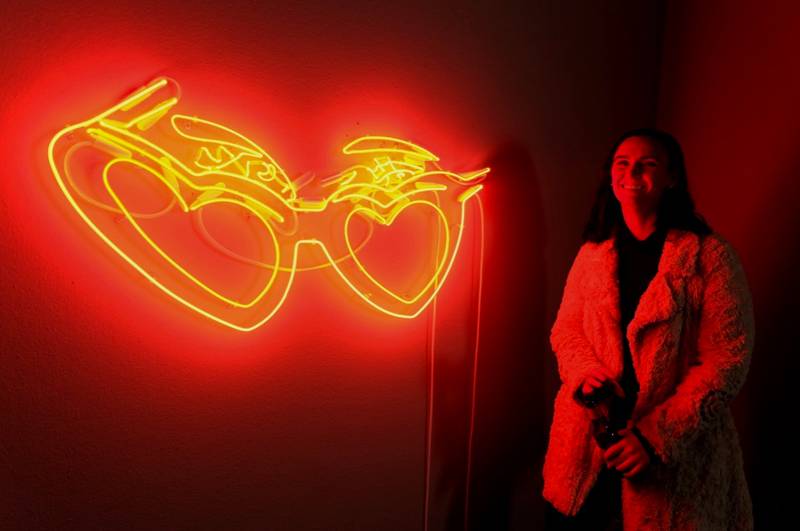
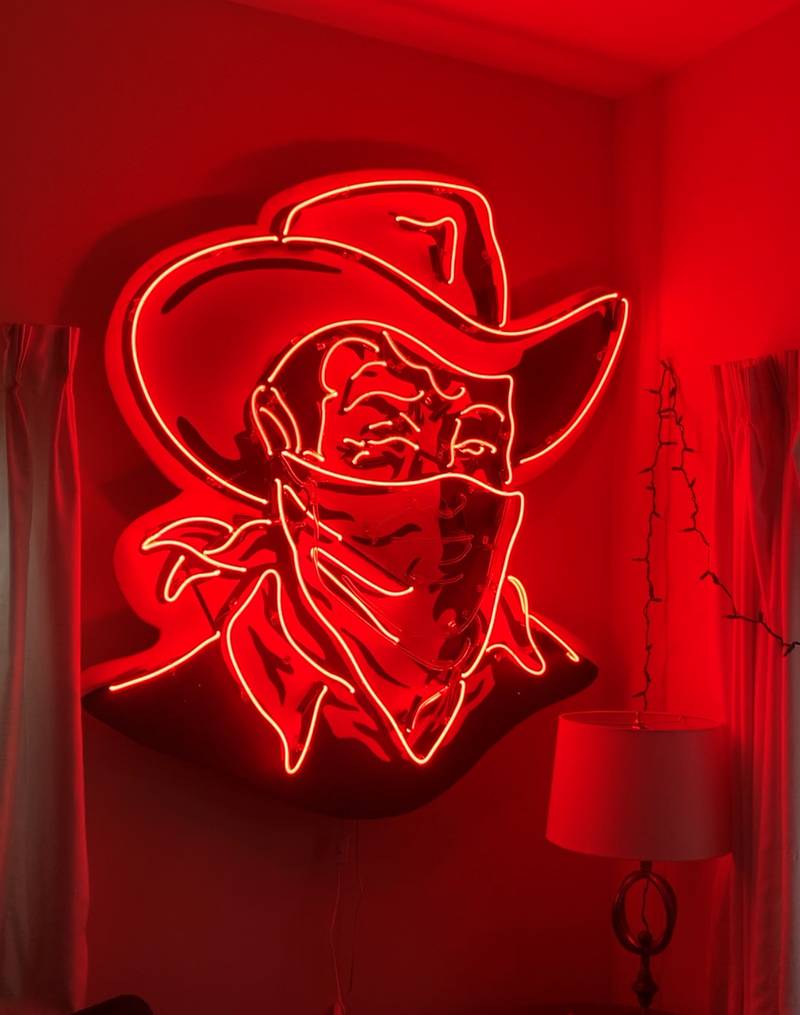
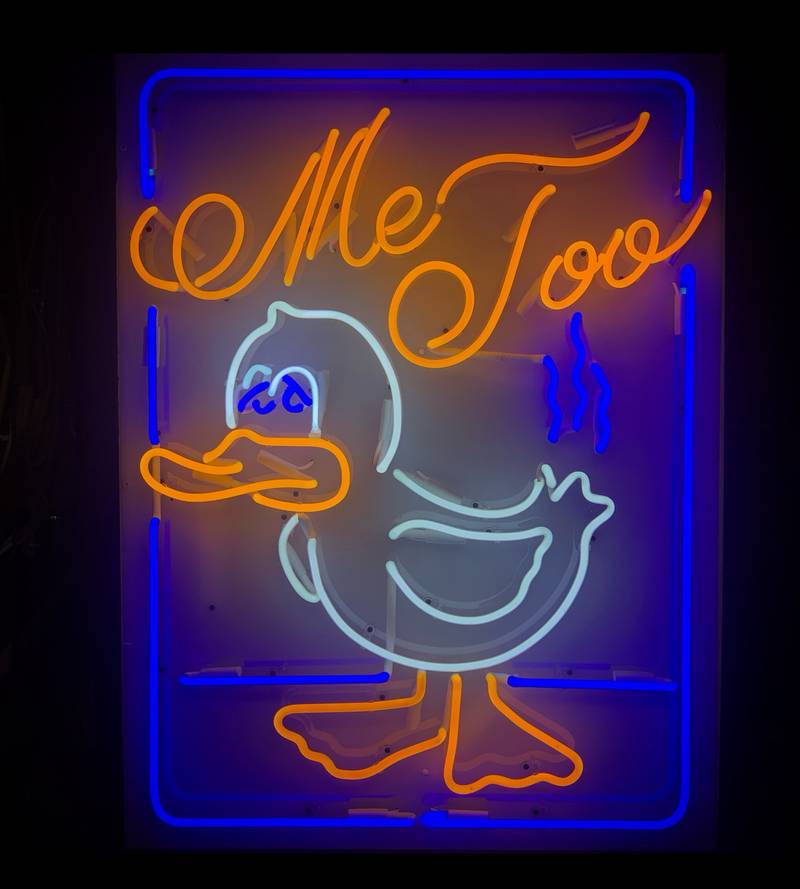
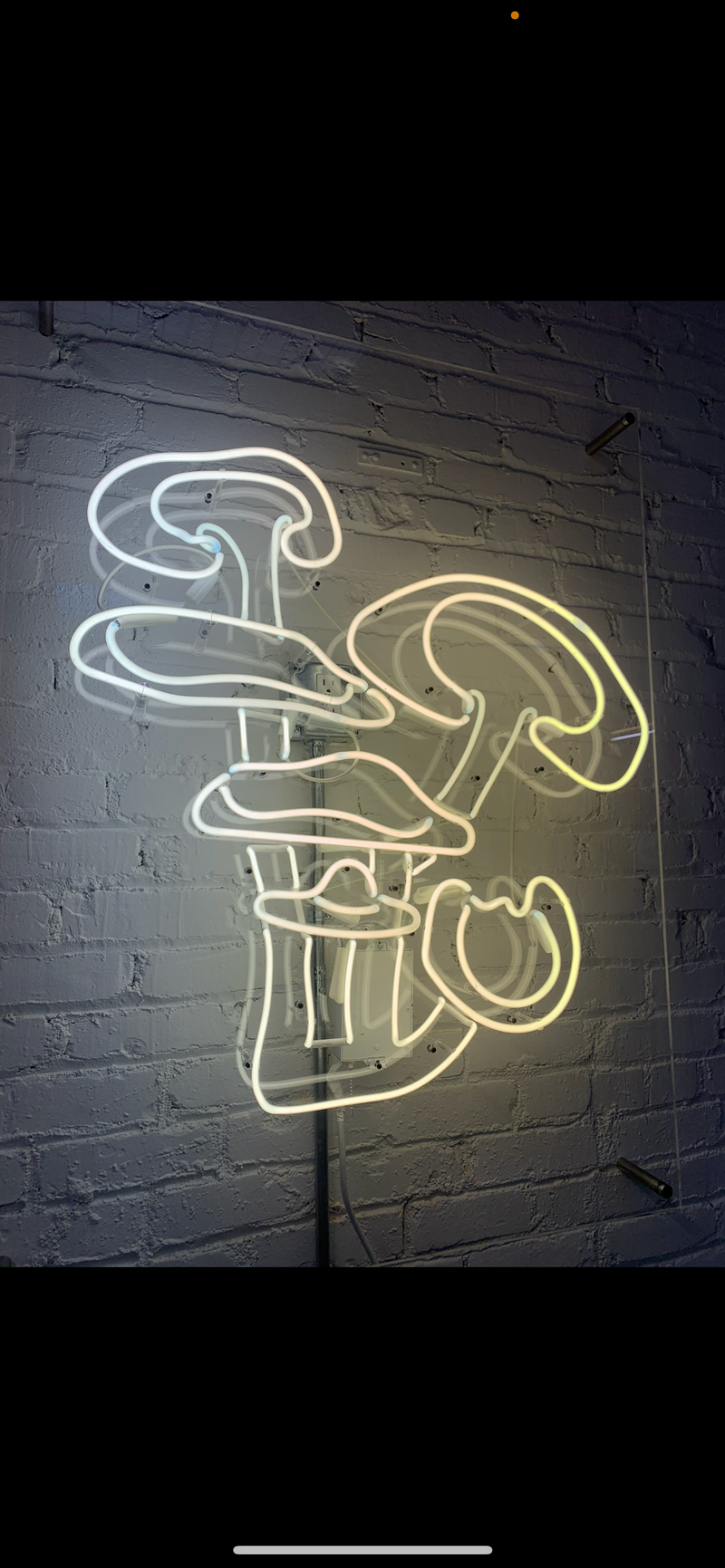
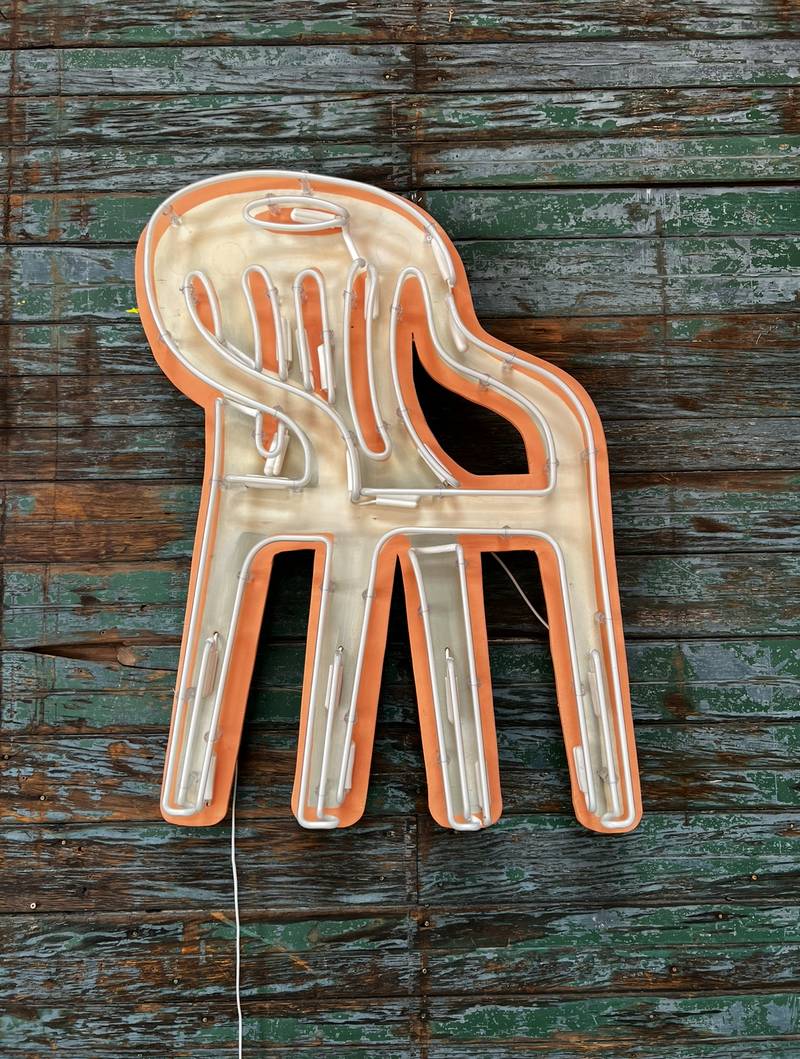
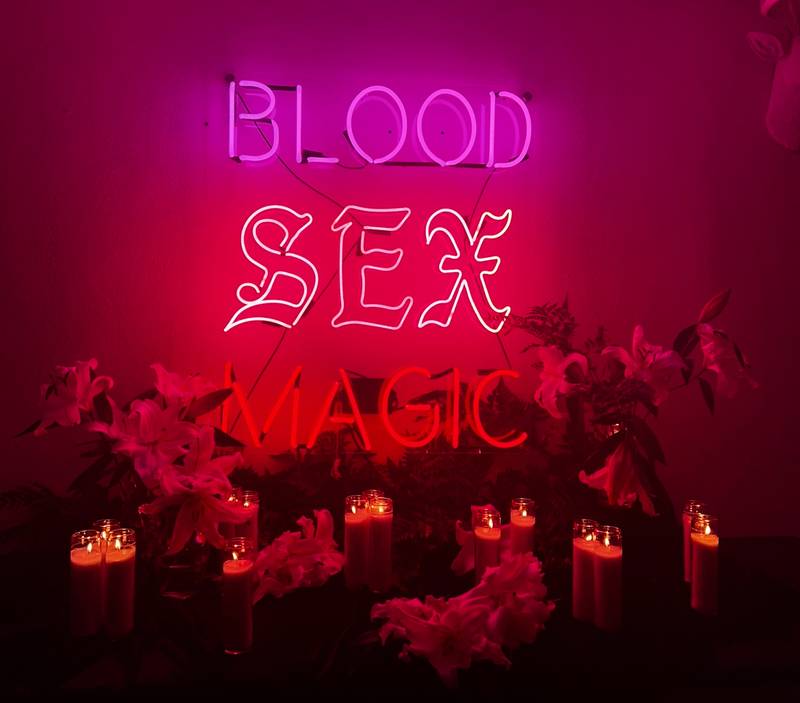
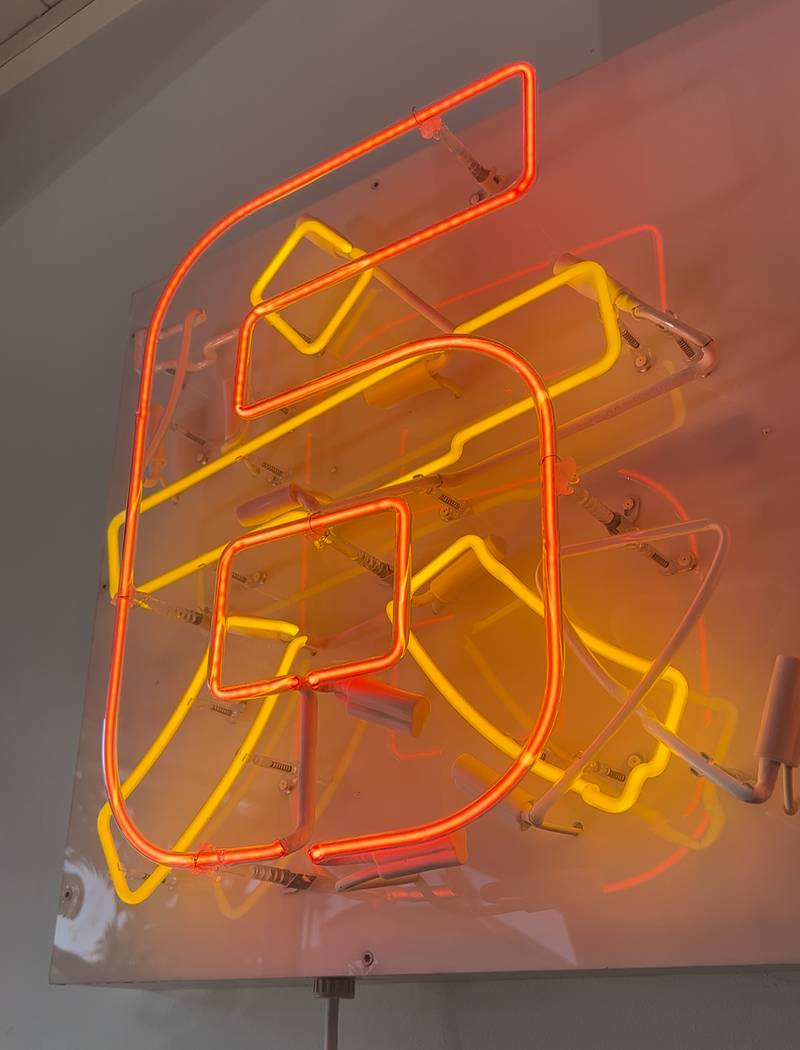
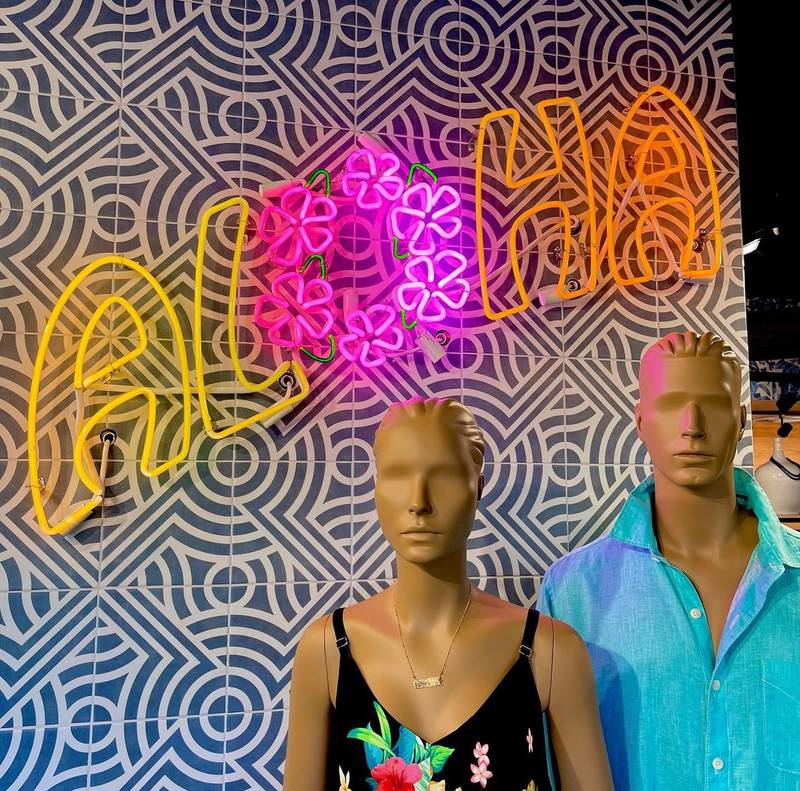
Glass is still what we love bending, but LED neon flex has grown to account for roughly 44.2% of the neon sign market, the largest single material segment, as businesses balance running cost with visual impact.
People ask me all the time what actually separates one neon shop from another. Here's the honest version: most of what shows up when you search “neon sign” ships from an overseas factory. I do it differently. I'm Dani Bonnet, and I hand-bend every glass neon sign myself in my Echo Park studio — heating the tubing, shaping each letter over the flame, filling it with gas, wiring it, testing it, and in most cases delivering it myself. If you want custom neon signs in Los Angeles that are actually made in Los Angeles, you're in the right place.
What I build
I build a wider range of work than people expect walking in. Most of it falls into a few buckets:
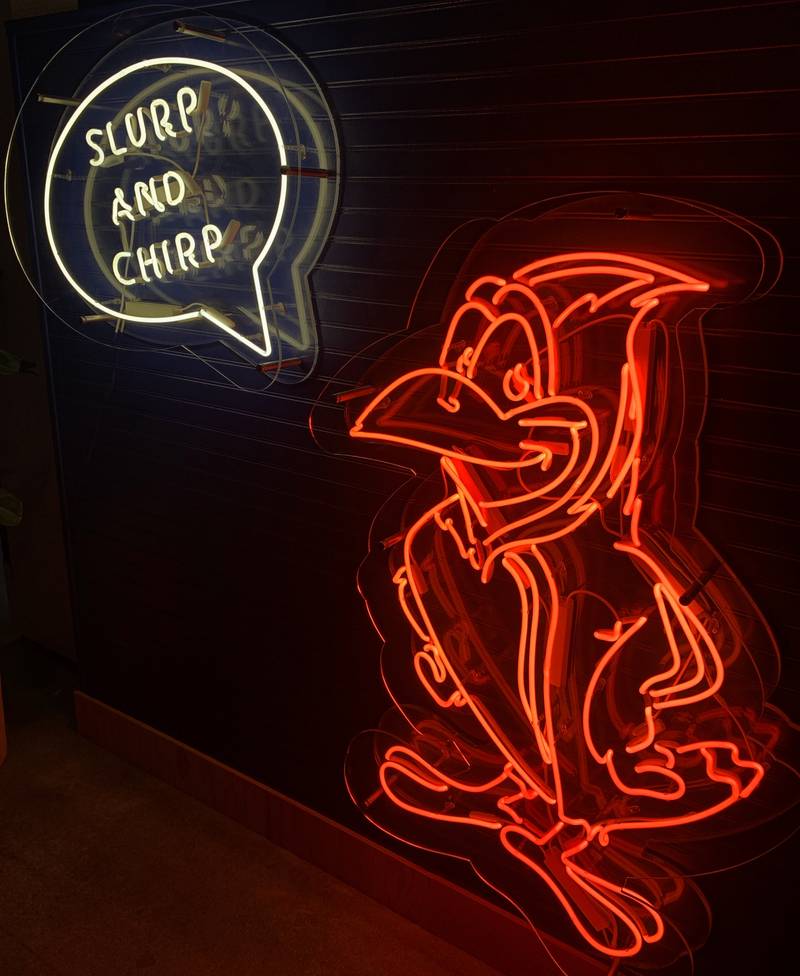
Storefront and commercial signage — the illuminated pieces that go above a door or behind a bar and end up defining the whole room. Restaurants, bars, gyms, salons, retail, hotel lobbies.
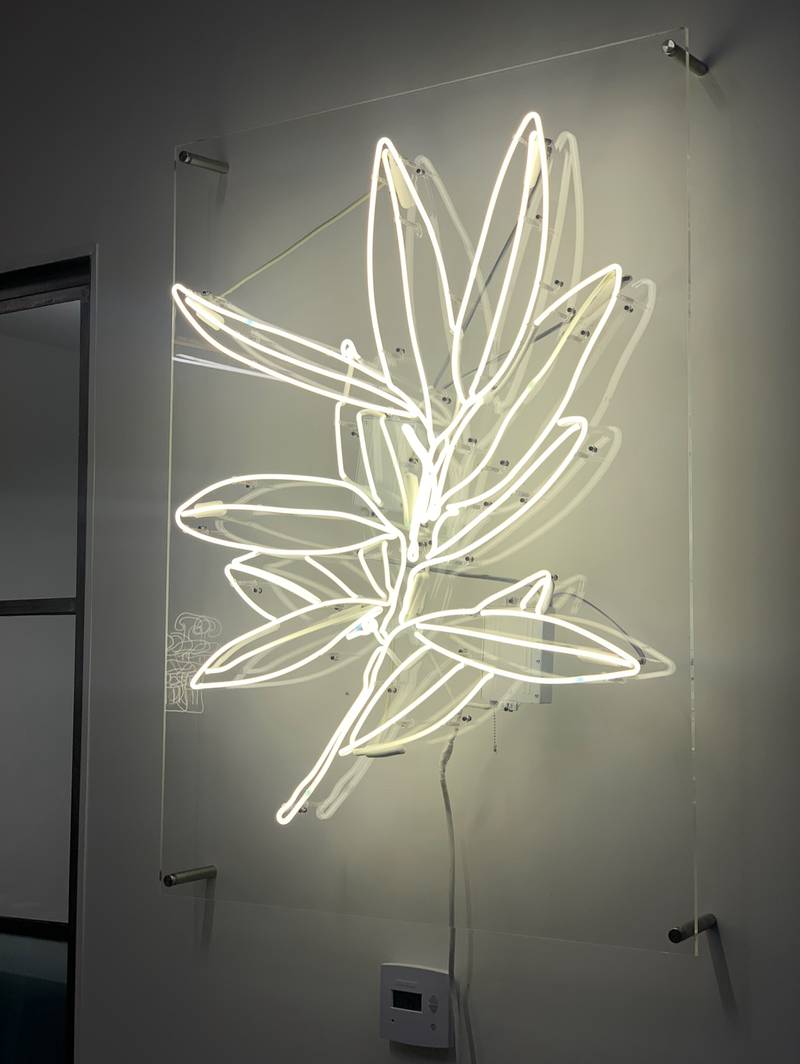
Office and brand installations — reception walls, conference rooms, showroom features. I love doing these in all glass when budget allows
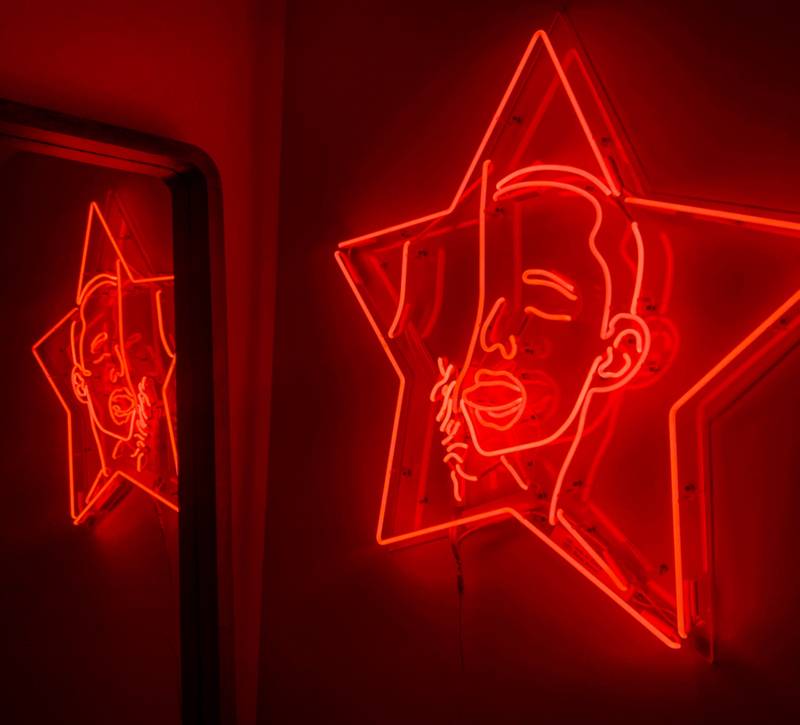
Artistic neon — one-off pieces for collectors, gallery shows, museum installations. This is where I get to push the craft the furthest. Some of this work is hanging in private collections; some has anchored gallery exhibitions.
Film and TV production — practical neon built to a shoot date, engineered to hold up on camera. Important to add a dimmer to these projects (I have learned that the hard way!)
Events and weddings — built for one night, or pulled from inventory and rented.
Vintage neon restoration — old signs brought back from the dead. If you've got something from a shuttered business, or a family piece that's gone dark, there's a good chance I can re-bend the broken sections, re-pump the gas, and swap the transformer.
If you've been searching for a neon sign maker in Los Angeles who can point you to an actual studio instead of a drop-shipper, this is it.
How a custom neon sign actually gets made
This is the part I want to walk through properly, because this is where the difference between shops really shows up. Six stages, start to finish.
1. Brief and consultation
Every job starts with a conversation. You tell me the wording or artwork, roughly what size you're picturing, and where it's going — indoors, outdoors, behind glass, on an open wall. I ask about the mounting surface, how much ambient light is in the room, where the power's coming from, and what budget you're working with. None of that is me being precious about it — it's what I actually need to know to build something that works in your space and not just on paper.
2. Design and a to-scale mockup
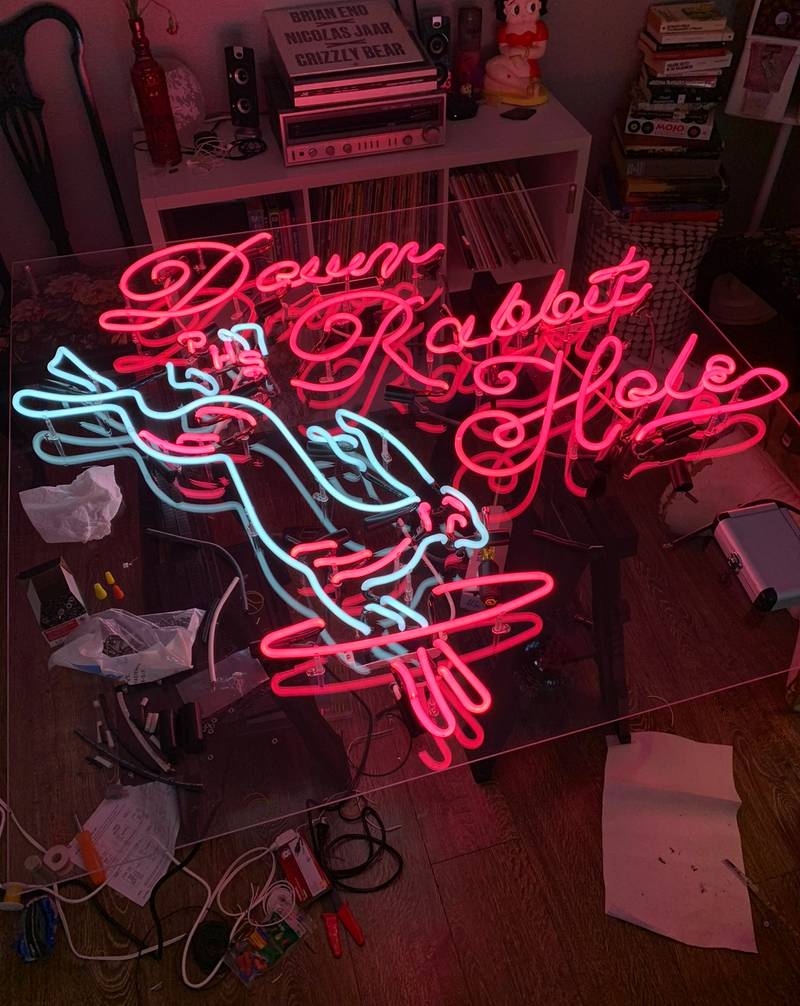
Once I know what we're building, I draw it out properly — the letterforms or artwork to scale, mapping where the tube bends, how many sections the sign needs, where the electrodes land, and how the transformer and wiring disappear into the mounting. You get a mockup showing the design, the color, the backing, all of it, before anything gets bent. Nothing goes into production without your sign-off. Changes are easy on paper. They're expensive once the glass is hot.
3. Glass bending
This is the part that takes years to get good at, and it's the part I still find genuinely satisfying.
I work with soft lead glass tubing — usually 8mm, 10mm, 12mm, or 15mm, depending on the letterform and how much visual weight the sign needs. It goes over a ribbon burner for long, even curves, or a crossfire for tighter, more localized bends. I'm rotating the tube the whole time it's heating so it softens evenly — an uneven heat and the tube collapses on one side, or you get a flat spot that catches the light wrong later.
Once the glass hits the right temperature — and you can feel that in how the tube resists, and see it in the color of the glow — I pull it off the flame and bend it in one motion against the pattern on my bench. I'm pushing a small amount of air through the tube as I bend so the inside doesn't pinch shut. A collapsed tube is scrap, full stop. You commit to the bend. Hesitate and the glass cools unevenly and the curve comes out wrong.
The tight stuff — the inside of a capital R, a script lowercase e, a sharp corner on a logo — takes short, precise heat in the crossfire, sometimes going back over a section a few times to get the angle right without warping the tube next to it. Every letter gets bent in sections and then joined. A word like “OPEN” in a clean sans-serif might only be four or five sections. A detailed script logo can be twenty-plus.
This is also why hand-bent glass looks different from LED trying to imitate it. The light in a glass tube is traveling through an actual column of gas. It has dimension to it — it's not sitting on a surface, it's coming from inside something.
4. Electrode work and gas fill
Once the bending's done, I weld electrodes onto both ends of each section. These are the electrical connection points, and getting a clean, airtight seal here isn't optional — a leak means the gas slowly escapes and the sign eventually goes dark.
After that, the tube goes on the bombarding machine, which is the part most people have never heard of. I pull a vacuum on the tube and run high current through it, which heats the glass and the electrode material from the inside and burns off any leftover moisture or oil from handling. A tube that skips this step fails early — the gas gets contaminated and you get dimming or flicker within months.
Then the gas fill. Reds and oranges get pure neon. Everything else — blues, greens, whites — gets argon, and the actual color comes from the phosphor coating inside the tube. Fill pressure matters more than people assume: too high and the sign runs hot and burns out fast, too low and it won't strike reliably. Once that's dialed in, I seal the tube and it's ready to wire.
5. Wiring, aging, and testing
I pick the transformer based on total tube footage, number of colors, and where the sign's going — an outdoor sign in direct sun needs a different spec than something backlit behind frosted acrylic. Once it's wired, I run the sign through an aging period, powered on for an extended stretch, so any weak spot in the glass or the electrode seals shows up now instead of on your wall.
After that, I check the whole sign for even glow, consistent brightness across every section, and correct color. Only then does it get packed up.
6. Delivery and installation across LA
Glass signs I deliver and install myself, in most cases — something this fragile is safest staying in as few hands as possible between my shop and your wall. For big commercial jobs — multi-panel signs, ceiling-mounted work, anything exterior — I handle the structural side directly with your contractor or property manager. LED pieces can ship or be hand-delivered depending on size.
Glass or LED?
I build both, and I'll tell you straight which one actually makes sense for your project.
Glass neon has a quality of light nothing else really matches — it comes from ionized gas in a real tube, so it has depth, warmth, and a faint flicker that reads as alive rather than static. A well-built glass sign runs 20 to 30 years, and when something does eventually need attention, it's almost always the transformer, which is a simple fix, not a replacement. For a restaurant, a bar, a gallery piece, or anything where the sign is the centerpiece of the room, glass is usually the right call.
Custom LED neon uses LED strips inside a flexible silicone jacket shaped to look like glass tubing. It's lighter, which matters for anything large and suspended. It's less expensive at scale, more shatter-resistant, and dims without extra hardware. For big-format signs on a real budget, outdoor pieces in high-traffic spots, or anything that needs to travel, LED is often the smarter pick. See the full LED vs. glass neon comparison if you're still deciding.
I quote both when a project could reasonably go either way, and I'll tell you which one I'd pick if it were mine.
Working with a local neon light company
Buying local means an in-person studio consultation, a real look at colour and glass before you commit, local delivery and installation, and someone to call if a transformer fails in year six. We work throughout Los Angeles and Southern California. Recent builds include the Bad Roman restaurant lighting commission and the Last Bookstore sign recreation.