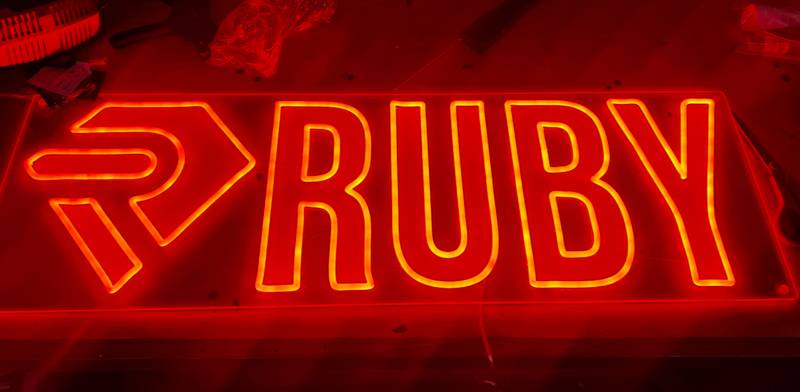
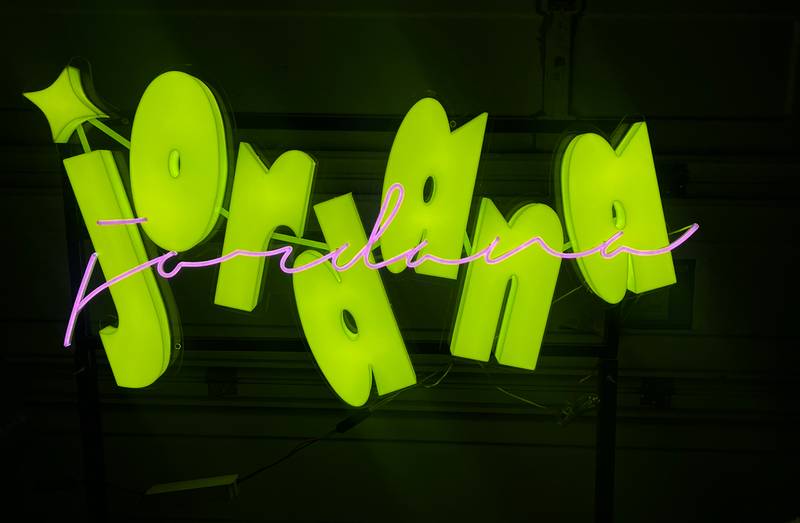
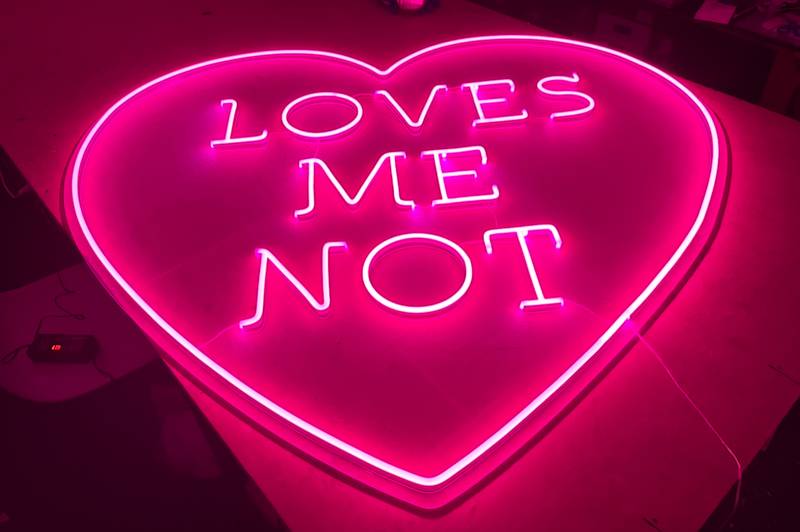
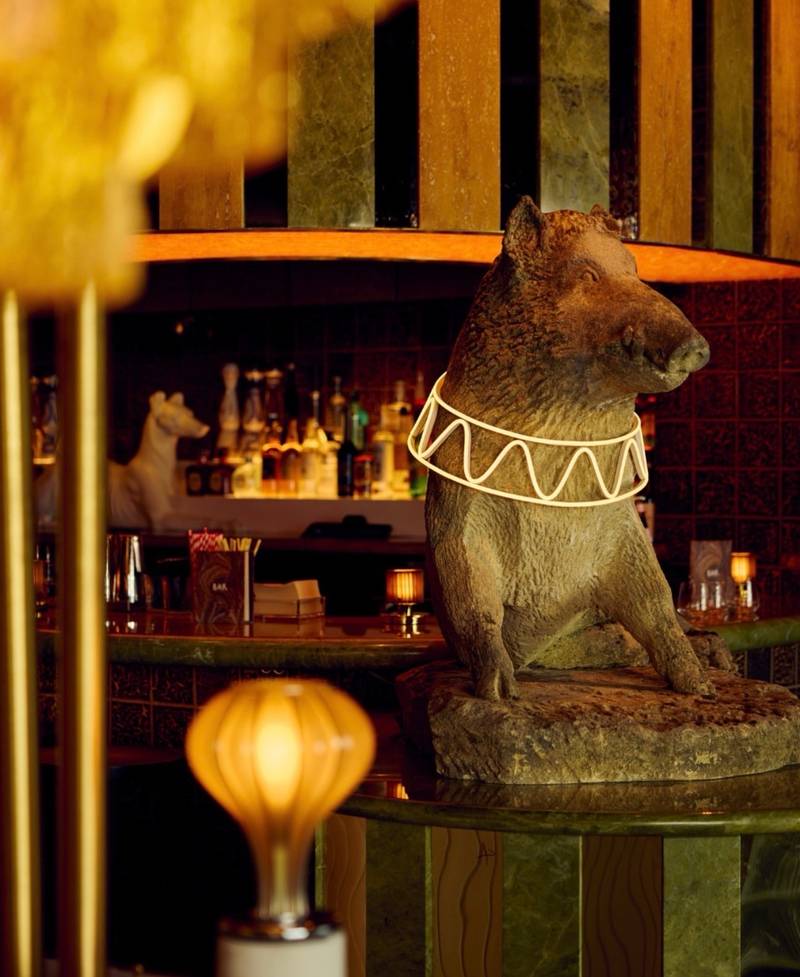
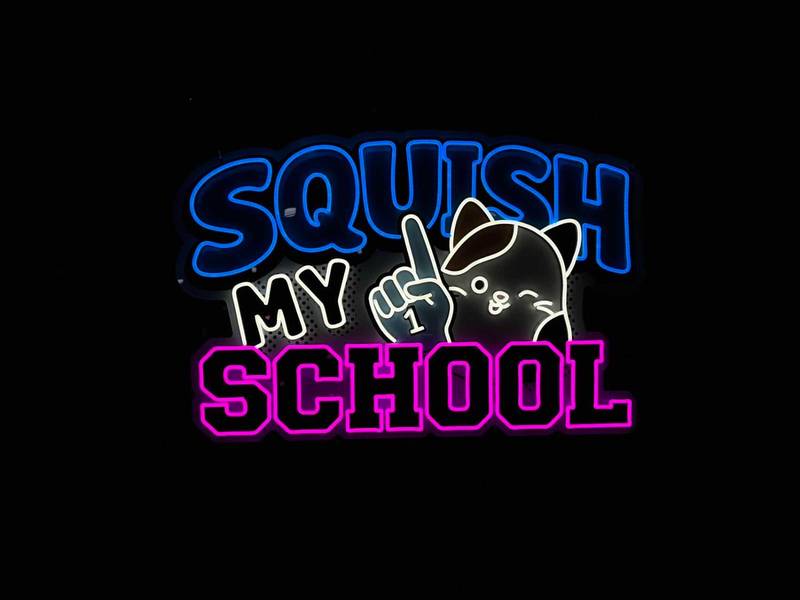
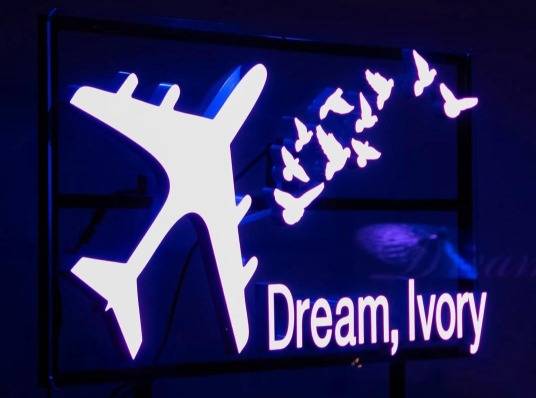
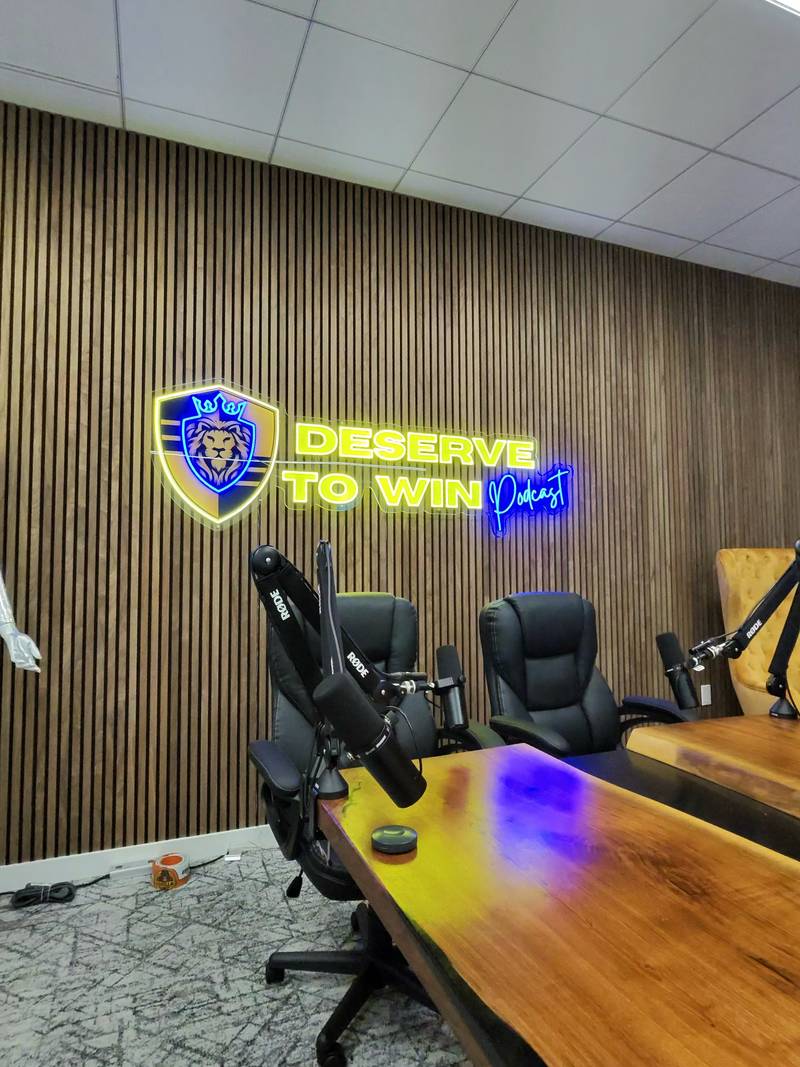
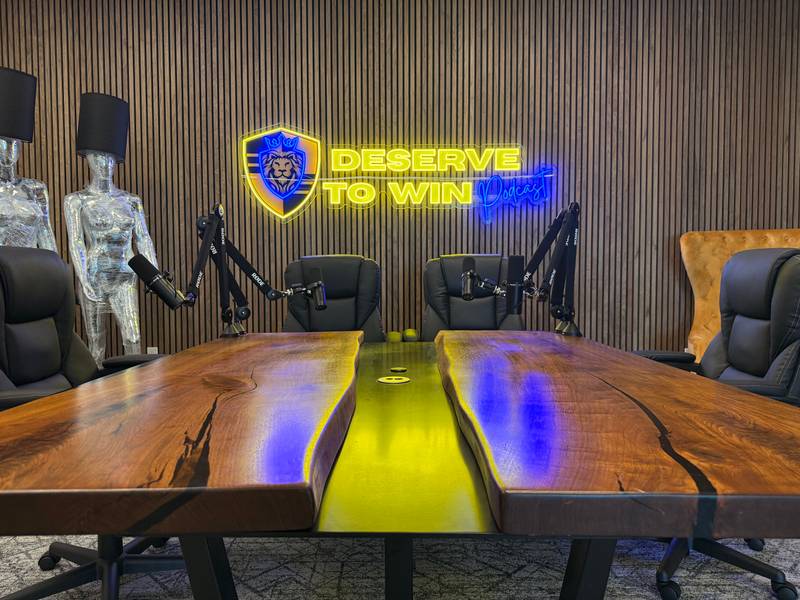
LED neon isn't a downgrade from glass, it's the fastest growing segment of the industry. See our breakdown of neon sign industry statistics for 2026 for the sourced numbers behind that shift.
Everybody in LA seems to be talking about LED neon these days — but most of the studios talking about it only sell LED, which means they'll tell you it's the right call every single time, because it's the only thing they've got. I'm Dani Bonnet, founder and lead fabricator at Neon Flamingo, and I build both glass neon and work with modern LED solutions out of my Echo Park studio. That matters, because it means I can actually tell you which one's right for your project before you spend a dollar.
We build custom LED neon signs for businesses, events, storefronts, and home installs — hand-fabricated, Pantone color-matched, delivered and installed locally. If LED's the right call for your job, we will build it well. If glass is the better fit, I'll tell you that instead.
When LED neon is the right choice
There are jobs where LED genuinely wins, and I want to be specific about why — not just "it's cheaper."
Events and weddings. LED's lightweight, there's no glass to break in transit, and it packs flat for easy transport and reuse. A wedding sign that has to travel from a venue in Malibu to a reception in Pasadena and then live on a wall at home for the next twenty years is exactly what LED's built for. It's also easy to set up without specialist tools, which matters when you're working against a venue's load-in window.
Home decor and kids' rooms. LED runs cool to the touch and operates at low voltage — typically 12V. No glass to shatter if something gets knocked. For a nursery, a teenager's room, or a home office feature wall, that combination of safety and low running cost is hard to argue against. It's also lighter, so it fixes to drywall without needing to find a stud.
Storefronts and retail on a budget. At the same spend, LED gets you a bigger sign than glass would. If coverage is the priority — filling a window or a wall — and budget's a real constraint, LED delivers more visual impact per dollar. The fabrication's faster and the materials cost less, so the savings are real, not just marketing.
Pop-ups and temporary installs. If the sign needs to move — a pop-up activation, a brand event, a temporary showroom — LED's the obvious pick. It unscrews from its mounts, disconnects at the driver, and travels flat. Glass can be moved too, but it needs careful crating and carries real breakage risk every time it ships.
Outdoor signage in sealed enclosures. LED in a properly sealed, weather-rated build handles outdoor exposure well. I spec the right enclosure, driver, and IP rating for the location. If you need something that can go outside a storefront or above an entrance, that's a build I do regularly.
Multi-color designs. Color-changing and remote-control options are simple with LED — RGB strip, a compatible driver, a remote. Getting the same effect in glass means separate tube sections for every color, each with its own transformer, which gets expensive fast. For a sign that needs to shift between brand colors or run an animated effect, LED's the practical answer.
When glass neon is the better call
This is the section most LED-only shops won't write, because they can't sell you the alternative. I will, because it's how I'd want someone to talk to me.
Fine art and gallery pieces. Real glass neon — light traveling through a continuous gas column inside a hand-bent tube — has depth and warmth LED can't replicate. It's not a surface, it's a volume. For a collector piece, a gallery installation, or anything where the quality of the light is the actual point, glass is the right material. LED neon looks like neon. Glass neon is neon.
Flagship brand signage where longevity matters. A well-built glass sign runs 20–30 years. LED strip degrades over time — the diodes lose output, the silicone jacket can yellow, and if a section fails, you're replacing strip rather than repairing a tube. For a sign meant to define a flagship location for the next two decades, glass is the more durable investment. It's also repairable — a broken section gets re-bent, re-pumped, and refitted. You call me, I come to you.
Film and TV hero props. Glass reads differently on camera, especially under a close lens. The depth of the glow, the slight brightness variation across a tube, how it responds to a camera move — that stuff matters to a director of photography. LED's fine for background dressing, but when the sign's in frame and it counts, glass is what gets specified. More on that on the film and TV production page.
Vintage-style storefronts where authenticity matters. If the whole point of the sign is that it looks like it's been there since 1962, LED isn't going to get you there. The slight irregularity of a hand-bent curve and the warmth of real gas glow are the thing you're actually paying for.
If your budget allows glass and the job calls for it, I'll say so. A studio willing to talk you out of the more expensive option when it's wrong for you is one you'll call back.
How custom LED neon signs come together
People assume LED neon is simple because there's no flame involved. The fabrication's different from glass, sure, but the decisions that determine whether a sign looks good and actually lasts are just as technical.
Materials. Not all LED strip is equal, and this is where a lot of cheap signs fall apart. Bargain modules use lower-grade diodes that lose output faster and shift color over time. Good strip, sourced properly and matched with documented binning data, holds its color and brightness across the full run of the sign. For a commercial sign lit eight hours a day, that difference adds up fast — and it's exactly the kind of thing I make sure is right before anything gets built.
The acrylic backing. The LED tube mounts to an acrylic panel — clear for the floating look, coloured or frosted for specific effects. The panel's cut to the shape of the design, and the sign hangs on standoffs that lift it off the wall, which is what creates the shadow gap that makes it read as a real object rather than a flat graphic.
Design and tube runs. LED flex is shaped cold — no flame, no ribbon burner. But the design still takes real planning. Where the tube runs join, where power injection points fall on a large sign (long runs of LED strip lose voltage over distance, so the far end goes dimmer than the near end without injection), and how the wiring's concealed all have to be worked out before fabrication starts. A poorly planned LED sign has visible joins, uneven brightness, and exposed cable. That's a design failure, not a limitation of the material.
Color matching to Pantone. This is where a lot of custom LED signs fall short. Getting brand-accurate color in LED means picking the right color temperature, working from strip that's tightly binned (the diodes sorted so they all fall within a narrow chromaticity range — LED binning explained), and getting a lit sample approved before fabrication starts. You get a powered sample of the strip in the specified color for sign-off. What you approve is what goes into the sign.
Driver selection. The driver — LED's version of a transformer — has to match the strip's total wattage, not be undersized for it. An undersized driver runs hot and shortens the LED's lifespan significantly. Every build gets specced to the load with real headroom, which is one of the things separating a sign built to last from one built to a price point.
Finishing and testing. Once it's assembled, the sign gets powered and run for an extended period before it leaves the studio. Any weak joins, uneven brightness, or driver issues show up here, not on your wall.
Custom LED logo signs for LA businesses
Commercial LED signage is a different category from decor LED, and it's worth being clear about what that actually means.
For storefronts, reception walls, office branding, retail displays, and restaurant and bar signage, the spec changes. Larger tube diameter for more visual weight. Higher-density strip for better color uniformity across a wide sign. Commercial-grade drivers with longer rated lifespans and better thermal management. Weatherproofing for anything going outside. None of that's an upgrade — it's the baseline for a sign that's going to run eight-plus hours a day in a commercial space.
I've built LED logo signs for retail storefronts across LA, office reception walls for tech companies, and large-format illuminated signage for LA brands running exterior and interior installs. The Netflix hologram and neon installation and the Bad Roman Beverly Hills lighting commission are both examples of large-scale commercial LED work that needed engineering well beyond standard decor fabrication — custom mounting, high-output drivers, integration with the broader lighting design. More detail on both of those is on the custom neon logos & business signs page.
Custom LED wall signs for reception areas and brand headquarters are one of the most common requests I get from commercial clients. The brief's usually the same — the logo, brand-accurate color, clean mounting with no visible cable, and a sign that looks like it belongs in the space rather than like it got ordered online. That's achievable in LED when it's built properly, not just assembled.
Send me the brand file and the space dimensions and I'll come back with a fabrication-ready proposal.
LED neon for events and weddings in LA
Wedding signage is the single most common LED request I get, and it makes total sense. Names, dates, phrases — one-off pieces that need to look good for one night and then live on a wall for years after. LED's the right material for that: lightweight, shatter-resistant, easy to set up at a venue without tools, easy to hang at home afterward.
LED wedding signs typically run 24–36 inches wide for a name or short phrase, though I've built pieces up to eight feet for ceremony backdrops and photo walls. The process is the same as any custom piece — you send wording or artwork, I send back a to-scale mockup showing letterform, color, and size, and nothing goes into fabrication without your approval.
Corporate events and brand activations are a different brief. There the sign's usually a logo or campaign phrase, it needs to travel to multiple venues, and it has to survive being set up and broken down by event staff who aren't neon specialists. I build event LED to travel — packaged safely, with clear setup instructions, cable management that's foolproof. For brands running signage across multiple locations, I can build duplicate sets too.
Pop-up retail and experiential marketing are another strong use case. A sign that goes up in a pop-up space for a weekend and then moves to the next location is exactly what LED's built for. I deliver and install across LA for events — if you need the sign up and lit by a specific time, that's a logistics conversation I've had plenty of times before.
LED neon sign care and maintenance
A well-built LED sign needs very little attention, which is most of the appeal. Here's what actually matters.
Lifespan. High-quality LED strip is rated at 30,000–50,000 hours of illumination — roughly ten years at eight hours a day, or several years of continuous use. The L70 rating (the point where output drops to 70% of original brightness) is the standard measure. Cheap strip hits L70 much earlier than its spec suggests, because lower-grade diodes lose output faster under heat. That's why strip quality matters at fabrication, not just at the price-comparison stage.
What affects lifespan. Three things: strip quality, power supply matching, and ventilation. Signs in sealed enclosures with no airflow run hotter, and heat's the main enemy of LED longevity. Wherever the build allows, I leave a clear path for heat to escape — standoffs that lift the backing off the wall, ventilation gaps in enclosed housings. A sign that runs cool lasts longer.
Cleaning. Dry microfiber cloth on the acrylic face. No solvents, no abrasive cleaners, nothing wet near the strip or the driver. That's genuinely it.
Annual checks. Make sure the driver stays cool and unobstructed — don't stack anything on top of it or push it into a tight space where heat builds up. Re-tighten mounting hardware once a year; standoffs can work loose over time, especially on drywall.
If a section goes dim or dark. Usually the driver or one specific strip section, not the whole sign. In most cases the failed part is replaceable without redoing the whole piece. Send me a photo and a description of what's happening and I can usually diagnose it remotely.
Mounting, wiring, and installation
LED neon is light — most signs weigh a fraction of their glass equivalent — so the mounting options are pretty straightforward.
How it mounts. Standoffs are standard: threaded posts that hold the acrylic backing off the wall, creating the floating shadow effect. For heavier or larger signs, a French cleat or concealed screw-down brackets give more structural support. Most signs fix straight to drywall without needing a stud, though anything over four feet wide, I'll specify the mounting points to land on structure.
Wiring. The strip runs at low voltage — 12V DC — from a small driver that plugs into a standard outlet. For a clean floating look with no visible cable, I hardwire the driver into a wall switch so the sign turns on and off with the room lighting. For storefronts and reception walls, I remote-mount the driver in a ceiling void or junction box so no power hardware sits behind the sign at all.
Relocating and reinstalling. This is a genuine LED advantage over glass. The acrylic backing unscrews from its mounts, the cable disconnects at the driver, and the whole piece travels flat. Moving offices, rebranding, taking a sign from one venue to another — that's a straightforward process. I can pack, relocate, and reinstall, or walk you through doing it yourself.
I handle delivery and installation across LA County — Echo Park, Santa Monica, Beverly Hills, West Hollywood, Culver City, Pasadena, and Glendale.
Frequently asked questions
What's the difference between LED neon and real glass neon?
Glass neon is hand-bent tube filled with neon or argon gas — it has depth, warmth, and a glow that comes from inside the tube rather than off a surface. LED neon is flexible strip inside a silicone jacket mounted to acrylic: lighter, less expensive, shatter-resistant, easy to ship. Both look good; they just suit different jobs and budgets.
Is LED neon cheaper than glass neon?
Usually noticeably cheaper, especially at larger sizes and multi-color designs. At the same budget, LED gets you a bigger sign. That's a real advantage when coverage matters more than the quality of the light itself.
Is LED neon safe for a kid's room or a busy space?
Yes. It runs cool to the touch, operates at low voltage, and won't shatter if it gets knocked. That's why I recommend it for kids' rooms, event rentals, and anywhere in a high-traffic spot.
Can LED neon be dimmed or remote controlled?
Easily. Dimmers, remotes, and color-changing options are all available on LED — it's one of its real advantages over glass, which needs extra hardware to dim and can't color-change at all.
Can LED neon be used outdoors?
In a sealed, outdoor-rated build, yes. Tell me where it's going and I'll spec the right enclosure, IP rating, driver, and mounting for that location.
How long does an LED neon sign last, and what affects its lifespan?
A well-built sign using high-density 12V strip runs 30,000–50,000 hours — roughly ten years at eight hours a day. Lifespan comes down to strip quality, driver matching, and ventilation. Signs in sealed enclosures with no airflow run hotter and age faster.
What maintenance does an LED neon sign need?
Very little. Clean the acrylic face with a dry microfiber cloth, check the driver stays cool and unobstructed, and re-tighten mounting hardware once a year. That's the whole routine for a well-built sign.
How is an LED neon sign mounted and wired?
Most signs mount on standoffs fixed to drywall or masonry. The low-voltage cable runs to a driver that plugs into a standard outlet, or hardwires into a wall switch for a cleaner finish. For commercial installs, I remote-mount the driver in a ceiling void or junction box.
Can an existing LED neon sign be relocated or reinstalled?
Yes — the acrylic backing unscrews from its mounts, the cable disconnects at the driver, and the piece travels flat. It's one of LED's clearest practical advantages over glass.
Can you match my brand's Pantone color in LED neon?
Yes. I select the color temperature and specify strip from a tight bin — the diodes sorted so they all fall within a narrow chromaticity range, which is what gives you consistent color across the full sign. Before fabrication starts, I send a powered lit sample for approval. What you sign off on is what goes into the sign.
See how custom neon signs get made, explore business signage and logos, or check out work for film and TV production. Need a repair instead? See neon sign repair. Ready to start? Get in touch.
This page was written by Dani Bonnet, founder and lead fabricator at Neon Flamingo, building both glass and LED neon in Los Angeles and recommending the right material for each job.