


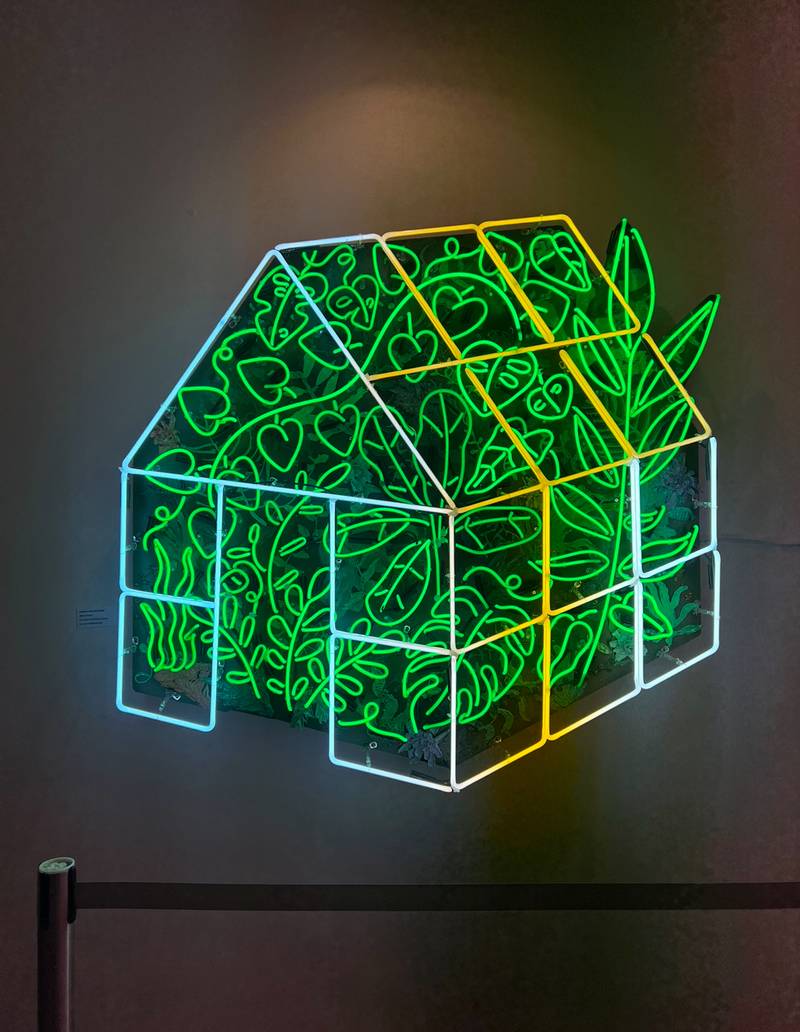
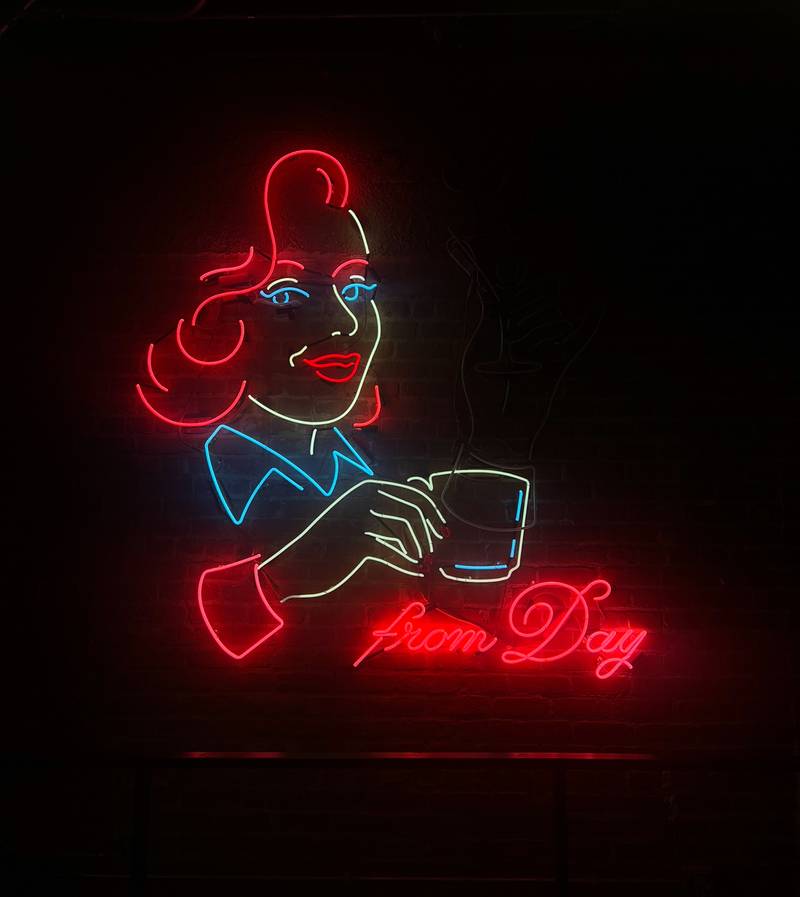
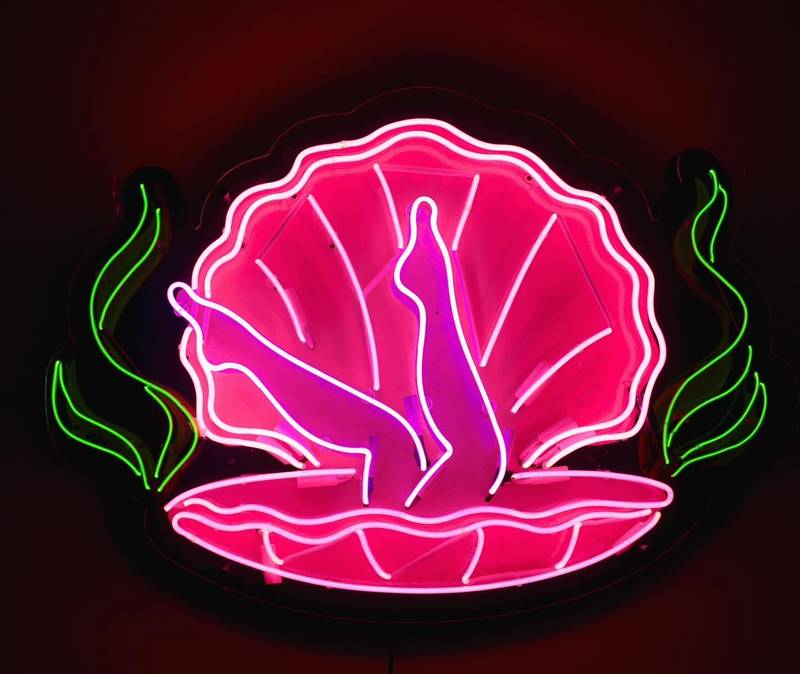
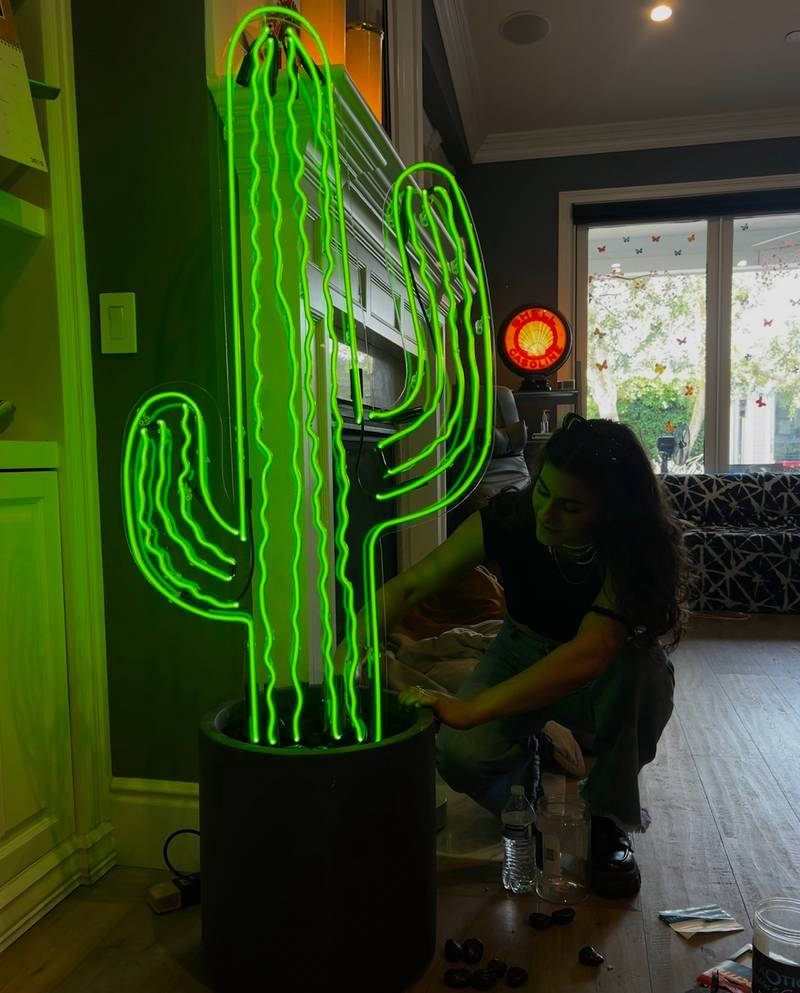
Artistic neon is where this studio started, not where it ended up. Before the commercial commissions, before the restaurant installs and the tech-company lobbies, I was bending glass because I wanted to make things that glowed. That's still the center of what I do. I'm Dani Bonnet, founder and lead fabricator at Neon Flamingo, and I work in hand-bent glass neon as a medium in its own right — sculpture, wall works, large-scale installations, gallery pieces, all made here in Echo Park.
I also fabricate neon for other working artists who need their drawings translated into light without losing the hand in them. That's a different job than building a business sign, and it takes a different kind of studio — one that thinks about the material the way an artist does, not just a technician. This is that studio.
Neon as a medium — what actually makes it different
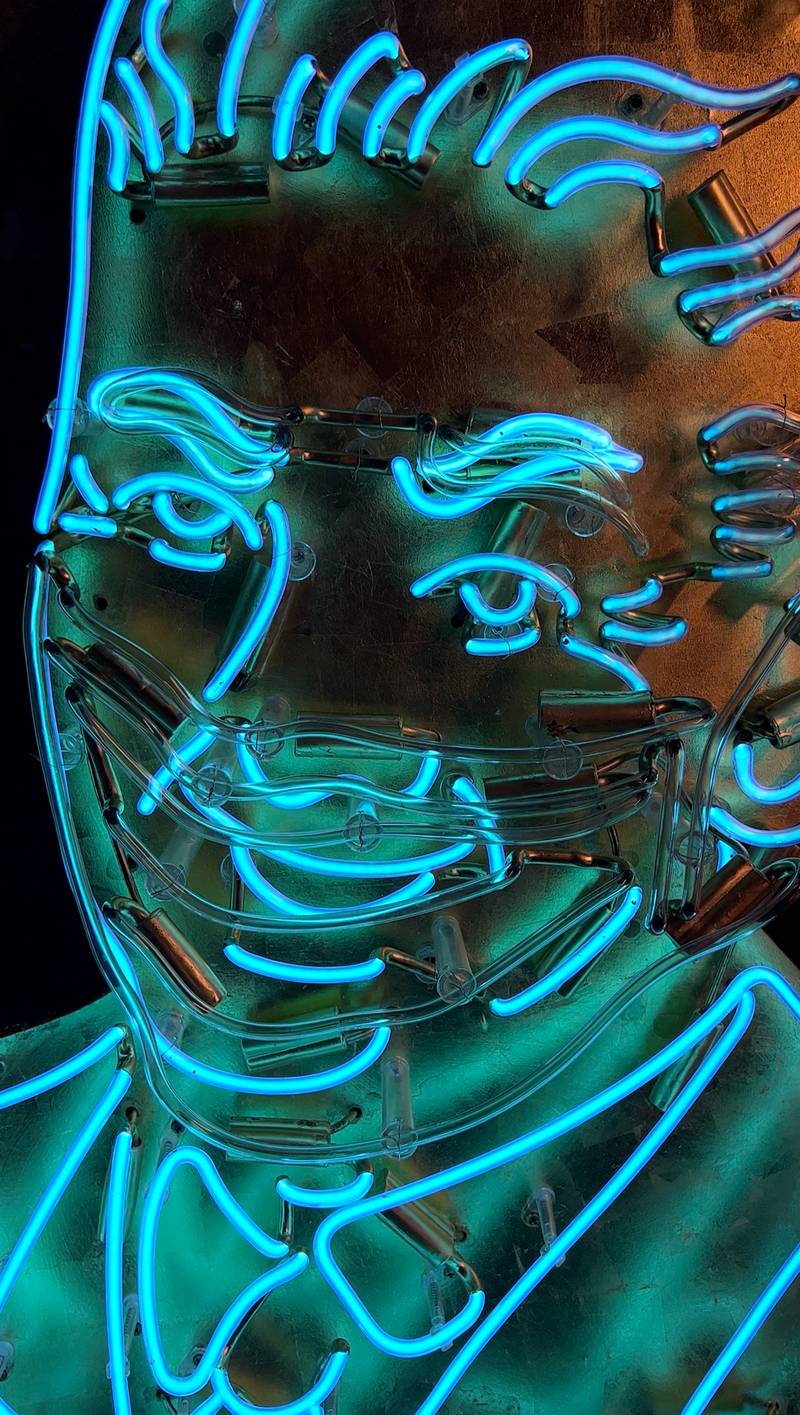
People ask me what separates glass neon from everything else on the market, and honestly, it's that it's a continuous drawn line in light. Every curve in a finished piece carries a decision I made at the torch — how fast I rotated the tube, how long I held the heat, how I breathed into the glass to open a bend. That's not a metaphor. The hand of the maker is physically in the material in a way a cold-bent LED strip can't touch.
LED flex gets cut to length and bent around a template. It's a useful product, and I use it myself when a client needs it. But it doesn't have weight. It doesn't have the small irregularity that makes a line feel alive. Glass neon is heated, shaped, and cooled — every section is its own object, and the imperfections are part of what gives it presence in a room.
There's also the aging argument. A well-made glass sign doesn't degrade the way LED does, where the diodes dim evenly until the whole strip just goes flat. Glass neon ages well — the phosphor in colored tubes develops a warmth over the years, and even when a section eventually needs re-pumping, the glass itself is usually still good. The transformer's the part that wears out, and that's a straightforward repair. The piece itself can last decades.
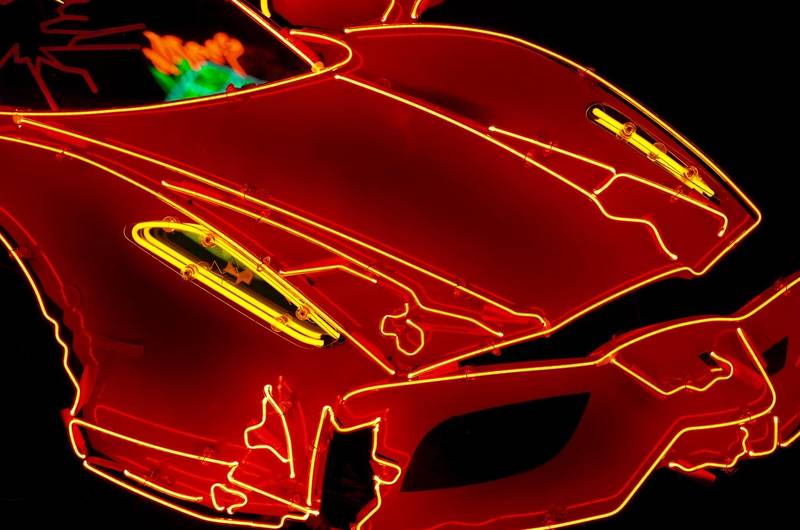
And then there's how it photographs and films. I've spent enough time on film and TV sets to know this firsthand — real glass neon has a depth and glow that reads completely differently on camera than LED does. The light wraps. There's a faint, natural flicker off the transformer that cameras love. Collectors and gallerists notice the same thing — a glass neon piece on a wall has a presence an LED approximation just doesn't have.
Original neon art and sculpture
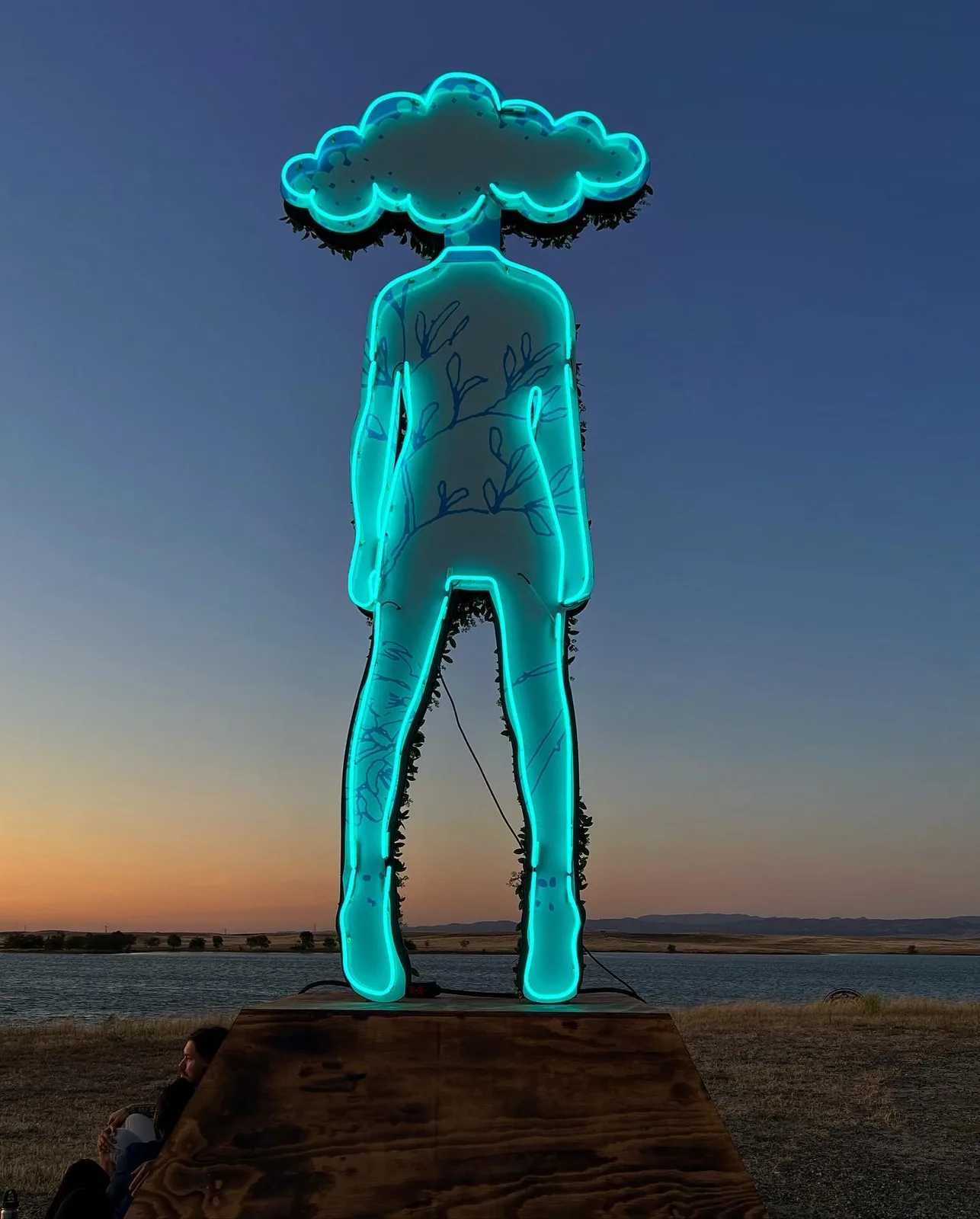
My own practice covers free-standing sculpture, suspended work, and mixed-media pieces built on metal, wood, plexi, and found objects. Scale runs from small collector pieces — the kind that sit on a shelf or hang in a bedroom — up to large-scale museum installations that need structural rigging and coordination with curators.
Recent exhibitions include a solo show at Muzeo Museum in Anaheim, the OFF//ON outdoor exhibit at the Hollywood Palladium, Electric Winter with Pabst Blue Ribbon, and a creative commission for Vans. Each one came with its own set of problems to solve — outdoor weatherproofing, ceiling rigging, multi-section armature design, working a brand into the piece without losing the art — and that problem-solving is genuinely the part I find most interesting about this work.
Available and past work lives in the neon art gallery on this site. If you're a collector looking for something specific — a particular palette, a scale that fits a certain wall, a figurative subject — reach out directly. Most of what I make is commissioned rather than sitting around waiting to sell, so the gallery shows what's possible more than it shows current inventory.
Artist commissions and fabrication services
A real part of what I do is fabricating neon for other working artists. Worth explaining clearly, because it's a different job from a sign shop taking a logo file and outputting a sign.
When another artist brings me a drawing — a sketch on paper, a pencil concept, a finished illustration — my job is solving the physics without overriding their hand. That means working out the tube runs so the glass flows through the design without breaks the artist didn't intend, figuring out where the electrodes land (they have to land somewhere structurally sound), sizing the transformer, and designing the armature. None of that should be visible in the finished piece. The artist's line is what you're supposed to see.
The commissioning artist keeps full authorship. My name doesn't go on the work unless we've agreed otherwise. What you get in the handover: editions documentation if it's part of a limited run, gallery labelling formatted to standard museum requirements, a condition report, and care instructions for whoever ends up owning the piece. If you're a gallerist or artist looking for a fabricator you can actually trust with your vision, get in touch and we can talk through how that process works for your project.
Museum, gallery, and public installations
Large-scale and public installation work is its own discipline. The Muzeo Museum show needed ceiling mounts engineered to gallery load ratings, wiring concealed in the wall cavity, and condition reporting formatted to the museum's permanent-collection standards. OFF//ON at the Hollywood Palladium was outdoors, which meant weatherproofed enclosures, UV-stable materials, and coordinating installation with the venue's production team.
What I've learned doing this work is that fabrication is only half of it. The other half is logistics — crating that actually protects fragile glass in transit, white-glove delivery and unpacking, reinstallation documentation so a traveling show gets rebuilt correctly at every venue. I've built that infrastructure because the work demands it. A neon installation that arrives damaged, or can't be reinstalled the same way twice, isn't finished work. It's a liability.
If you're a curator or gallery director working on a show involving neon, I'm happy to talk through the technical requirements early. The earlier I'm in the conversation, the better the result ends up being.
Buying or commissioning a neon art piece
Here's how it actually works. You bring a sketch, a reference image, a concept, or just a conversation about what you want a room to feel like. We meet at the Echo Park studio, or do a remote consultation if you're not local, and talk through scale, color, glass diameter, and what the piece needs to do structurally. From there I build a to-scale mockup — showing exactly how the glass runs, where the electrodes land, how the armature sits — and we get that approved before any glass gets touched.
Fabrication follows approval. Delivery and installation in the LA area, I handle myself. For collectors outside LA, I crate and ship with full condition documentation.
On pricing — I'll be straight about this, because I think collectors deserve a real answer, not a "contact for pricing" dodge. Neon art runs higher than commercial signage because the craft time is longer and the tolerances are tighter. Small collector pieces — a simple text or abstract form, wall-mounted — typically start around $800–$1,500. Larger sculpture, multi-section work, and installations get quoted individually based on complexity, scale, and what the install actually requires. Every piece comes with documentation for resale and reinstallation, which matters if you ever move it, lend it to a show, or sell it on.
Caring for a neon art piece
Most fabricators skip this section, and I think that's a mistake. If you're buying a hand-bent glass piece as a collector, you should know what you're actually getting into — and the honest answer is that it's not complicated.
The glass in a well-made piece runs 20 to 30 years under normal indoor use. The transformer is what eventually needs replacing, and it's a straightforward swap, not a reason to retire the piece. If a section goes dark, it's almost always repairable — re-bent, re-pumped, refitted. Glass neon isn't a disposable medium.
For hanging: most interior pieces mount on standoffs or a concealed cleat fixed into studs, with the transformer hidden behind the work or remote-mounted nearby. I supply the hardware and can install in the LA area. Don't hang a piece on drywall anchors alone — the transformer adds real weight, and the glass needs to be stable.
For dimming: this needs deciding at the design stage, since the right transformer has to be picked from the start. Retrofitting later means changing the transformer — doable, but an extra step. Tell me upfront if dimming matters to you.
For long-term care: this is where buying from a local studio actually pays off. If something needs attention five years from now, you're not shipping a fragile art piece across the country. You're calling me. That's a real advantage, and it's a big part of why I think buying neon art from someone who's still going to be here is worth taking seriously.
Frequently asked questions
Do you take commissions for original neon art?
Yes — commissioned art is a large part of the studio's work, from simple text pieces to layered figurative sculpture. Every commission starts with hand-drawn concept art and a to-scale mockup before I touch any glass. If you've got a subject, palette, or scale in mind, bring it to the first conversation.
Can you fabricate neon from another artist's drawing?
Yes. You keep authorship — I solve the physics. The handover includes editions documentation, museum-standard gallery labelling, a condition report, and care instructions. I don't put my name on another artist's work without explicit agreement.
How do I hang a neon art piece at home?
Most interior pieces mount on standoffs or a concealed cleat fixed into studs, with the transformer hidden behind the work or remote-mounted. I supply the hardware with every piece and can install in the LA area. The mount needs to go into something structural — the transformer's weight isn't something drywall anchors alone will hold reliably over time.
Can a neon artwork be dimmed?
Yes, with the right transformer specified at the design stage. A dimmable transformer is a different component from a standard one and needs to be chosen before fabrication. Retrofitting after the fact means swapping the transformer — possible, but cleaner to plan for up front.
Is neon art a good investment?
Hand-bent glass neon is a genuine craft object with a long life. Unlike an LED sign, it can be repaired and re-tubed pretty much indefinitely — the glass itself often outlasts the transformer by decades. Every piece comes with a condition report and technical notes so it can be serviced or reinstalled correctly down the line, which matters for resale and for lending to exhibitions. A piece made with care isn't a disposable object.
See how custom neon signs get made, browse the gallery, or explore recent projects. For business signage, see custom neon logos & business signs. Ready to talk about a piece? Get in touch.
This page was written by Dani Bonnet, founder, lead fabricator, and neon artist at Neon Flamingo, working in hand-bent glass neon in Los Angeles.