So You Want to Learn the Dying Art of Neon Bending?
Well. Good luck, kid.
I'm kidding — mostly. Let me give you every bit of advice I can to help you on your journey, because I genuinely want more people to learn this craft, even though I'm about to tell you it's harder than it used to be.
But here's the thing — you're not shy of a challenge. You're someone who takes a no and turns it into a yes, and that's exactly the mindset this craft actually requires. If you've got that in you, this is entirely possible for you. Trust me — that's genuinely how I got to where I am today.
I'll be honest with you upfront: this is one of the hardest crafts to break into right now. It didn't used to be this way. But so many neon shops, studios, and training facilities have shut their doors over the years — the path into this trade has gotten a lot narrower than it once was. For what it's worth, neon making is officially listed on the Heritage Crafts Association's Red List of Endangered Crafts. But remember anything is possible if you put your full heart into it!
Where You Can Actually Learn
There are a handful of real places left where you can go get your hands on the fire and start learning:
Lightwriters Neon Chicago — a real teaching studio in Chicago's Ravenswood neighborhood, running classes from one-day tasters to multi-week intensives.
The Museum of Neon Art (MONA) in Glendale — MONA runs a real "Bend, Blow & Glow" hands-on program, along with shorter immersive classes. I actually teach there myself on occasion, so there's a decent chance you'd end up learning from me directly.
Brooklyn Glass — a working neon shop and studio in Brooklyn that also offers classes, from one-day workshops up through multi-week courses, plus open studio time to keep practicing after.
That's genuinely close to the full list of formal options in the U.S. right now. It's a short list, which is exactly the problem.
What You'll Actually Need to Lock In On
1. Finding a Space That Lets You Practice
This is the hard part, and I mean genuinely hard. Formal classes will get you started, but real skill comes from repetition, and repetition means access to a torch on a regular basis — not just a weekend workshop once a year.
My honest advice: get friendly with a local shop. Start small. Buy someone a coffee, take them to lunch, build an actual relationship before you ever ask for anything. Once there's real trust there, that's when you ask if there's any way to trade your time or effort for time in the fires — running errands, cleaning up, helping with grunt work, whatever gets you in the door. Eventually, that can turn into a real apprenticeship or regular practice time. But it starts with a relationship, not a cold ask.
2. Or, Set Up Your Own Studio
If you have the resources, you can build your own setup. I'll be straightforward: it's expensive, and you need to be genuinely committed to the craft before you take this on — this isn't a hobby-budget decision.
Here's something worth knowing: I've been buying up torches and equipment from old neon shops that have closed over the years, and I'm genuinely happy to part with some of it for a fair price to help a new bender get started. If that's useful to you, reach out.
3. Practice. Then Practice More.
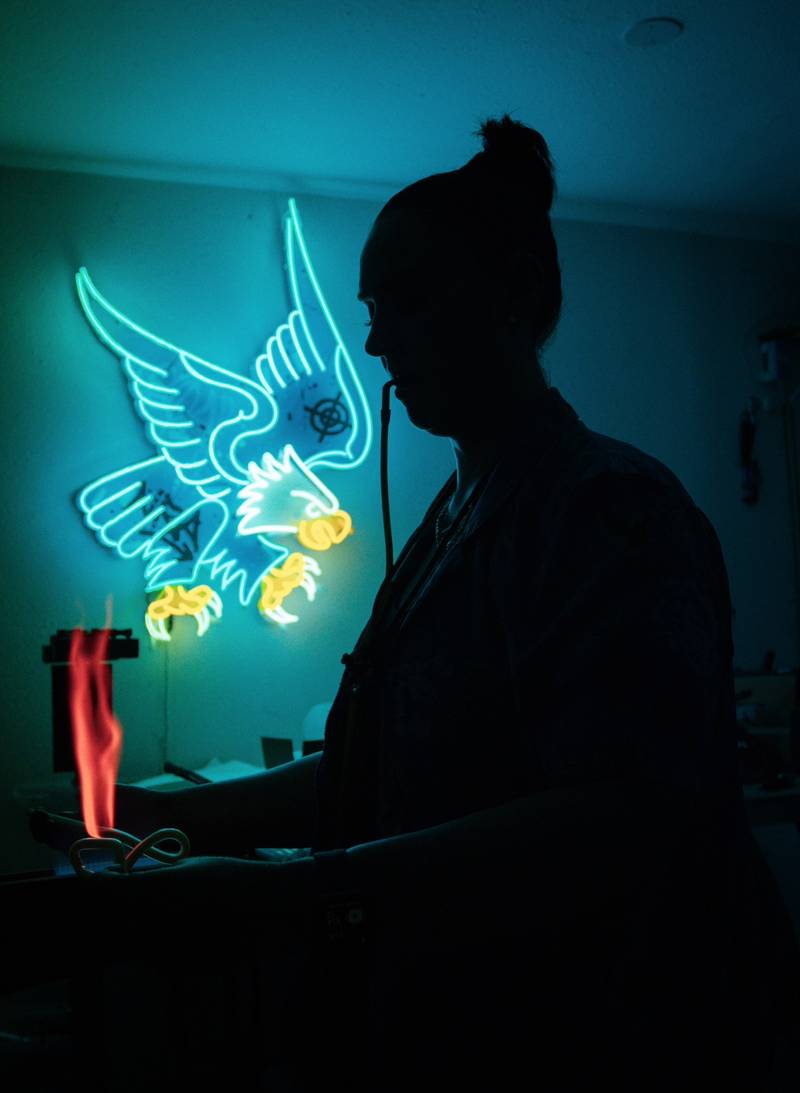
Once you have real access to a torch, there's no substitute for hours. Get in there for as long and as often as you can. It took me approximately five years of real practice before I felt genuinely good at this — not competent, actually good. You can absolutely compress that timeline by practicing more frequently and more intensely than I did starting out.
Work through every bend style you can, over and over, until it's muscle memory — until you're not thinking about the bend anymore, you're just doing it. That's the actual marker of progress in this craft: the point where your hands know what to do before your brain has finished the thought.
What's Next
I'm hoping to eventually have my own dedicated space where I can help students learn directly, on a more regular basis than the occasional class at MONA. If you're in Los Angeles and reading this, reach out — it's worth checking in to see if anything's changed since I wrote this post.
In the meantime, I'm genuinely happy to advise anyone trying to break into this craft. I can't promise it's easy, but I can tell you honestly what the state of the industry looks like right now, and which paths are actually realistic versus which ones are a waste of your time. Reach out if you want to talk through it.
If you'd rather commission the craft than learn it, this is the same craft behind our hand-bent custom neon fabrication for artists, brands and film productions.