I make custom booth signs for trade shows, conventions and expos. Send me your logo, your booth number and your move-in date, and I'll turn it into a lit sign people actually cross the aisle to look at. Below is how I build them, what I need from you to quote one, and the show-floor rules that shape the design before we start building.
Lightbox signs, channel letters and other glowing logos
Neon is a big part of what I do, but it isn't the only way to light your booth. Some logos look right as bent tubing. Others need a solid glowing face, raised letters or light washing the wall behind them. If your brand has a filled-in symbol or detailed lettering, we don't have to force it into a neon outline.
Custom lightbox signs
A lightbox sign puts the lighting inside a housing, behind a translucent face. Your logo or graphic sits on that face rather than being drawn in tubing. It's an option for solid shapes, brand colors and artwork that needs more detail. You might call it a light box sign, an illuminated sign or a backlit sign; send me a reference and we'll talk about the actual shape, finish and size instead of getting stuck on the name.
Front-lit channel letter signs
Channel letters are individual three-dimensional letters with lighting inside them. In a front-lit sign, the faces glow. They give a wordmark more depth than a flat panel, without changing it into an outline. For a trade show booth, we plan the backing and mounting together so your team isn't trying to position every letter separately during load-in.
Halo-lit channel letters and backlit logo signs
Halo-lit letters send light backward onto the surface behind them, leaving a glow around the edges of the mark. That surface matters: its color, finish and the space behind the letters all affect the result. A backlit logo sign can be a good direction when you want solid lettering with a softer glow rather than a bright illuminated face. Send a photo of your booth wall along with the logo so I can see what the light will land on.
Looking for backlit trade show displays? Tell me whether you mean a logo sign, a counter sign or a full illuminated graphic backwall. A fabric trade show lightbox isn't the same thing as a custom glowing logo. I'll look at your layout and explain what I can build for it before you commit to a direction.
Why a glowing booth sign stands out
A banner is a flat surface. An illuminated booth sign brings its own light. Walk any exhibit hall and you'll see row after row of vinyl under the same flat overhead lights. Hall lighting is designed to be even, not flattering, so every printed graphic ends up looking about the same. A lit sign doesn't depend on that light. It throws its own color onto the people walking by and stays readable from the far end of the aisle.
It also gets photographed. People take pictures of booths that look like something, and a glowing logo gives them a reason to stop and post it. That's free reach you can't buy on the show floor.
And it lasts. Trade show signs get crated, shipped, rigged, taken down and stored for months at a time. The frame, protective packing and replaceable hardware matter as much as whether you choose neon, a lightbox or channel letters. A banner that's been folded a dozen times doesn't. Even small vendor signs on a weighted base come back out for the next show.
How I build a booth sign, start to finish
People ask me what goes into one of these all the time, so here's the whole process.
#1 The concept call
Before I draw anything, I want to know what the sign has to do. Is it hanging over the booth or sitting behind a counter? Does it need to read from 8 feet or 80? A convention floor is loud visually, so height and contrast matter more than fine detail. I also ask how the booth breaks down, because the crate is part of the design.
#2 Design and artwork
Your logo gets rebuilt as clean vector artwork and adjusted for the sign style. With neon, glass can only bend so tight, small counters fill in, and hairline strokes have to get thicker. With lightboxes or channel letters, we look at the face, depth and how the light reaches your logo. I simplify where I have to, but I won't redraw your mark into something it isn't. You approve a proof before anything gets made.
#3 Making the sign
For glass neon, I heat tubing over a ribbon burner, bend it by hand against a full-size paper pattern and fill each piece with gas. LED neon follows a different build. Lightbox signs and channel letters need a housing, a face and internal lighting instead of exposed tubing. The construction follows the style we agreed on, not the other way around.
#4 Backing and wiring
The backing and wiring depend on the sign. Glass mounts to a cut acrylic backer with the transformer tucked into the frame and high-voltage wire kept clear of metal edges. For LED-lit signs, the power supply and cable routing are planned into the housing or backing. I calculate the draw from the actual equipment ratings so your team can order the right show power.
#5 Hanging and mounting hardware
This is the step people underestimate. A hanging sign needs a frame that doesn't flex, rated cable and hardware, and a plan for how it meets the rigging point the show gives you. A freestanding sign needs a base nobody can tip over on a busy afternoon.
#6 Burn-in, pack and ship
Every section gets lit and checked before it leaves the studio. Then it's crated with labeled hardware, a one-page hookup sheet and spares of anything easy to lose. If your team is setting up alone at 7 a.m. in another city, that sheet is what gets the booth lit without a phone call to me.
ComplexCon Los Angeles 2026
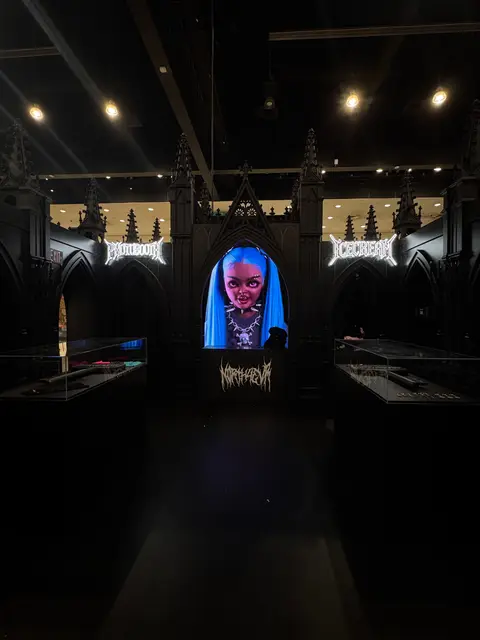
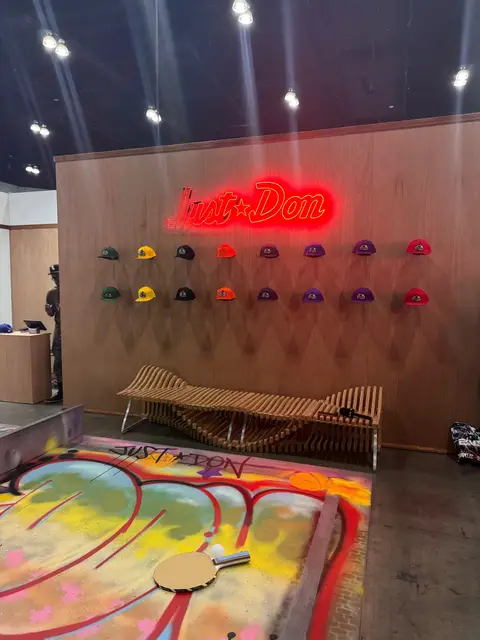
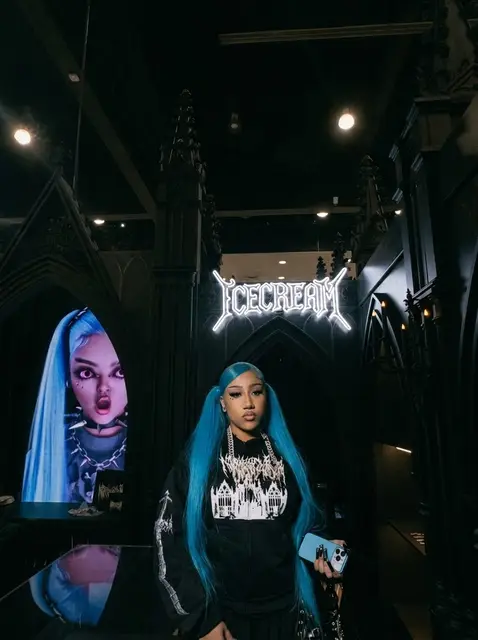
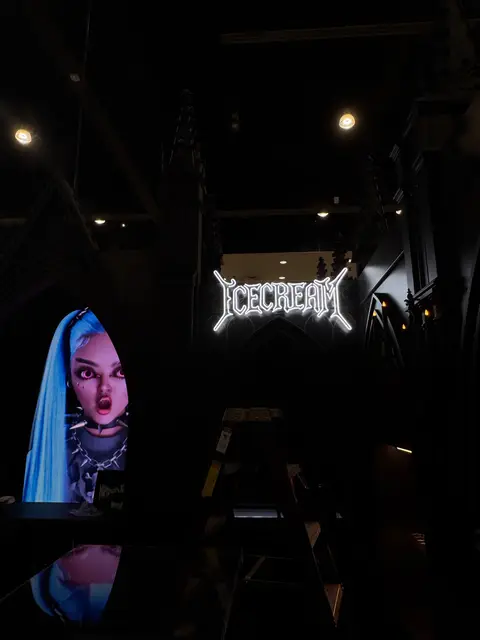
ComplexCon is about as demanding as a show gets: a hard opening date, a packed floor, union labor and hundreds of brands all trying to out-glow each other. This year I built signs for the North West booth and the Just Don booth at ComplexCon in Los Angeles.
For North West, the brief was dark and gothic, so the white ICECREAM wordmarks had to cut through a nearly black booth and stay crisp in every photo. For Just Don, it was a single red script sign over the hat wall, bright enough to pull people in from the aisle and land in the background of every picture taken there.