
Is Neon Dangerous? What You Should Actually Know
This is one of the questions I get asked pretty frequently in passing, usually from someone who's excited about a sign but has a nagging worry or anxiety in the back of their mind: isn't there gas in there? Isn't that dangerous? I get it — "neon gas" sounds like something out of a chemistry lab, and glass tubes filled with electricity and mystery gas can sound intimidating and intense if you've never had one explained to you. So let me actually break it down.
Is Neon Gas Itself Dangerous? No.
Neon is a noble gas — the same family as helium and argon. It's chemically inert, meaning it doesn't react with anything else, it's non-toxic, it's non-flammable, and it's actually present in the air you're breathing right now, in trace amounts. If a neon tube ever broke, the gas itself would just harmlessly dissipate into the room. There's no explosion risk, no toxic fumes, nothing to worry about from the neon gas specifically. That’s the really cool thing about the entire Noble Gas column in the periodic table! A bunch of non-reactive glowing elemental legends.
What About the Different Colors? This Is Where It Gets Nuanced.
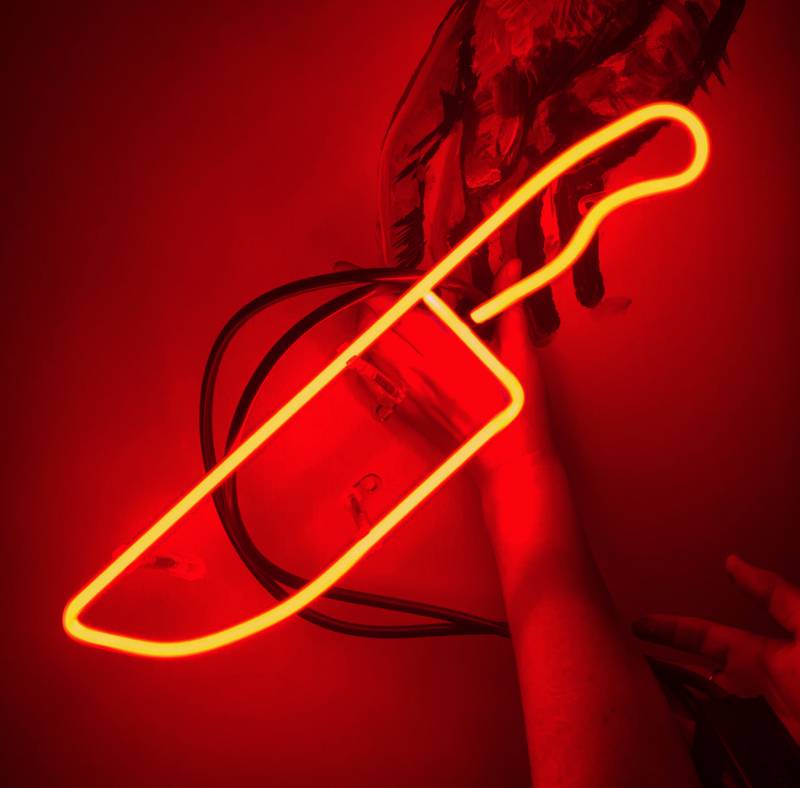
Here's something most people don't realize: pure neon gas only produces one color — that classic warm orange-red glow. Every other color you see in a neon sign, blues, whites, greens, comes from argon gas combined with a small amount of mercury vapor and a phosphor coating on the inside of the glass.
Argon itself is just as harmless and inert as neon. The mercury is the one I need to be honest with you about is a genuinely legitimate safety consideration in this whole conversation, and I want to be straightforward about it rather than downplay it. In a sealed, intact tube, that mercury poses zero risk (think of a vintage glass thermometer) — it's fully contained and never touches you or the air around you. The only scenario where it matters is if the glass tube physically breaks. Even then, the amount of mercury in a neon sign is extremely small, well below what used to be in old household thermometers, and the risk from a one-time break in a well-ventilated space is considered very low. It's not something to be careless about, but it's also not the dramatic hazard people sometimes imagine.
So What's the Actual Risk?
Honestly, it's not the gas — it's the same two things you'd worry about with any glass object plugged into a wall:
Broken glass. Neon tubing is genuinely fragile. If a sign is dropped, bumped hard, or mishandled, it can shatter, and broken glass is a real cutting hazard, same as any other glass object in your home.
Electrical safety. Neon runs on high voltage through a transformer. A properly built and installed sign, from a legitimate fabricator, is designed to handle that safely. An old, damaged, or poorly wired transformer is where real electrical risk comes from — which is exactly why I'd never recommend buying a neon sign from a source that can't tell you clearly how it was built and tested. (some mass produced Chinese neon glass signs pose a risk here)
Is Neon Safe to Have in a Home With Kids or Pets?
Generally, yes — mounted properly, out of reach of casual bumping, a well-built neon sign is a safe piece to have in a home. The same common sense that applies to any glass object or lamp applies here: keep it out of reach of anything that might knock it over, and don't let anyone play too close to it. If you're genuinely worried about breakage risk in a high-traffic or high-activity space, that's actually one of the specific situations I'd recommend LED neon for instead — no glass, no gas, relatively similar look, zero breakage risk.
Is Neon Flammable?
No. Neon and argon are both non-flammable, and there's no combustion risk from the gas itself. The only fire-related precaution with any neon sign is standard electrical common sense — keep it a reasonable distance from flammable materials like curtains or fabric, the same way you would with any lamp or plugged-in fixture, and make sure the wiring and transformer are in good condition.
The Bottom Line
Neon signs have a reputation for sounding more dangerous than they actually are. I have cut myself making them of course but I do not think any customer has ever reported drawing blood from on of my neon signs. So unless you want to pick up the art of neon bending you will be safe! The gas itself is harmless. The one legitimate consideration — mercury in colored tubes — only matters if the glass physically breaks, and even then the risk is low. The real safety factors are the same as any glass, electrical object: handle it carefully, keep the wiring in good condition, and buy from someone who actually knows how to build one properly.
Have questions about a specific piece or install? Reach out and I'm happy to walk through it with you.