Are Neon Signs Making a Comeback, or Are They a Dying Art Form?
Honestly, the answer is both — just at different times. Neon really did decline for a few decades, and understanding why matters, because it's exactly what makes the comeback I'm seeing right now so interesting.
Why Neon Lights Lost Their Popularity
Neon dominated American signage for most of the 20th century, but by the 1970s and '80s, it started losing ground, and it kept losing ground for decades. A few real reasons why:
LED and plastic-faced signs got cheap, fast. Once illuminated plastic and, later, LED signage became inexpensive to mass-produce, neon's higher cost and slower fabrication time made it a hard sell for most businesses just trying to put a sign above their door.
The skill pool shrank. Neon bending is a hands-on trade that takes years to learn well, and as fewer people entered the craft, fewer shops could produce it — which pushed prices up and availability down, which pushed more businesses toward easier alternatives. It became a bit of a downward spiral for the industry.
Tastes shifted. For a while, neon read as dated rather than cool — associated with old diners and dive bars rather than anything modern. Clean, minimal signage became the design trend, and neon fell out of step with it.
So no, it's not your imagination — neon really did become less popular for a long stretch. Fewer signs, fewer shops, fewer people learning the trade. I say all of this as someone who came into the craft on the tail end of that decline, when it genuinely wasn't the trendy thing to be doing.
Why Neon Is Coming Back
And yet, here I am, busier than ever. Neon is having a real resurgence, and I don't think it's a coincidence.
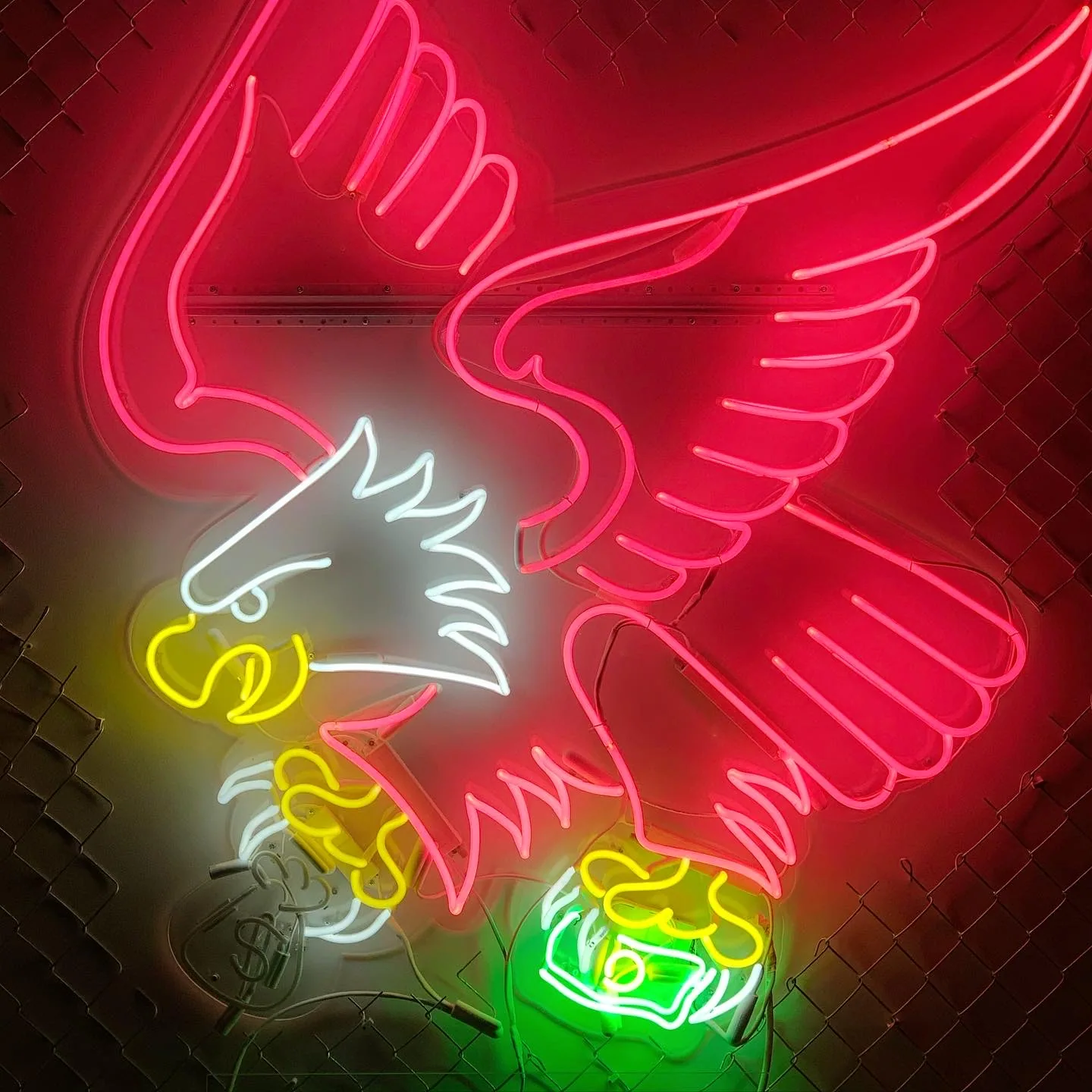
A lot of it comes down to nostalgia. Neon carries a retro aesthetic that millennials and Gen Z have genuinely embraced — the same instinct that's brought back vinyl records, film cameras, and vintage clothing. There's a hunger right now for things that feel real, made by hand, with some texture and history to them, instead of another flawless, mass-produced object. A neon sign is about as tactile and human as signage gets: it's warm, it's imperfect in the best way, and it photographs beautifully, which matters a lot in a social-media-driven world.
Social media has genuinely accelerated this. A glowing neon sign is one of the most reliably photogenic things you can put in a space — it's practically built for a photo backdrop. Restaurants, retail stores, and event spaces have caught onto that, and it's brought a wave of new demand from people who want a space that photographs well and feels a little more alive than a plain wall.
There's also a broader cultural pull toward craftsmanship right now. People are more interested than they used to be in knowing who made something and how — the same energy behind the rise of small-batch goods, local makers, and artisan everything. Neon fits right into that: it's genuinely handmade, by a real person, in a way that's increasingly rare.
What This Means Going Forward
I don't think neon is ever going back to being the default choice for every storefront the way it was decades ago — LED is simply too practical and affordable for a lot of everyday signage needs, and I've made peace with that. But I do think neon has found a genuine, lasting place: as the choice for people and businesses who want something with real character, not just illumination.
That's the neon I build every day in Los Angeles — pieces made for people who specifically want the real thing, not a substitute. If that's what you're after, let's talk about your project.
The comeback isn't just a feeling around the shop, it's backed by the industry data on where neon demand is actually growing, including regional demand splits and the LED share of the market.